
Introduction
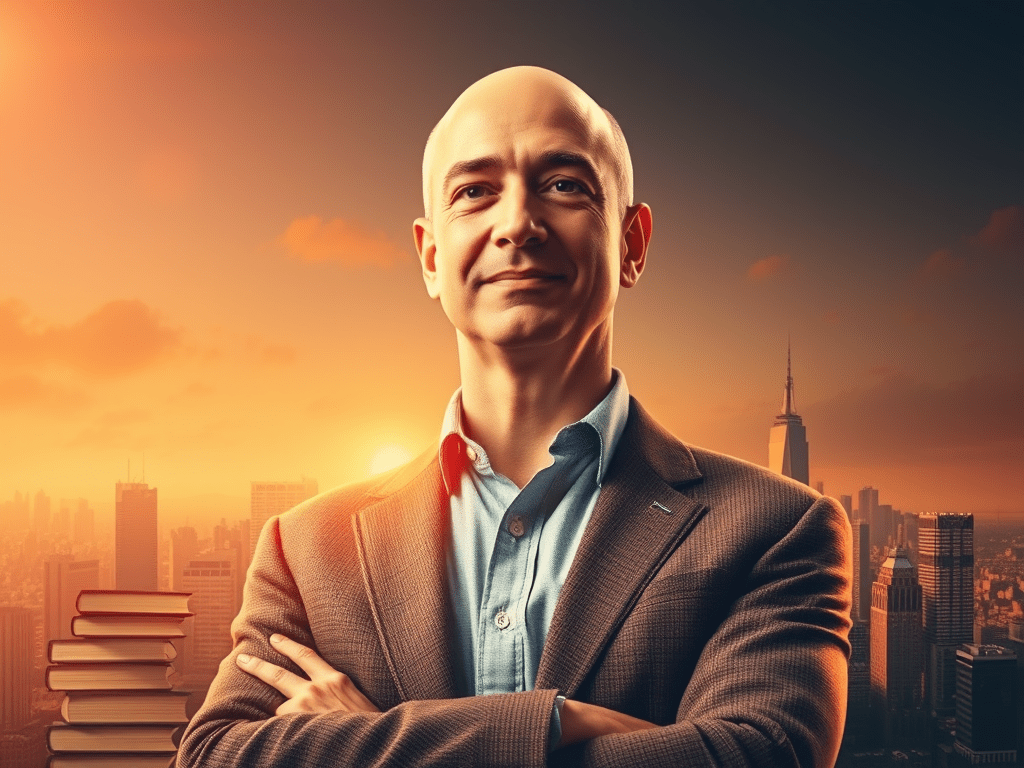
The story of Jeff Bezos is one of ambition, innovation, and remarkable success. As the founder of Amazon, he revolutionized the way we shop and transformed entire industries through his visionary thinking and relentless drive. Born in 1964 in Albuquerque, New Mexico, Bezos showed an early interest in technology and entrepreneurship. His journey from a young boy who loved to tinker with gadgets to the founder of one of the most valuable companies in the world is inspiring. This article delves into the key milestones in the story of Jeff Bezos, examining his early life, the establishment of Amazon, the innovative strategies that propelled its growth, the challenges he faced along the way, and his philanthropic efforts as he seeks to impact the world beyond retail.
The Early Life of Jeff Bezos: Childhood and Education
Jeff Bezos was born on January 12, 1964, in Albuquerque, New Mexico. Raised by a teenage mother, he spent most of his early childhood in Houston, Texas, and later moved to Miami, Florida. Throughout his formative years, Bezos exhibited remarkable aptitude for the sciences and technology. He enjoyed dismantling and reassembling electronics, showcasing an intelligent curiosity that presaged his future career in tech.
Jeff early life experiences were crucial in instilling resilience, creativity, and a willingness to take risks. His upbringing taught him the importance of hard work and dedication. These lessons would become instrumental as he embarked on the daunting journey of building a multinational e-commerce empire. As he transitioned from the corporate world to the entrepreneurial arena, Bezos applied the skills and insights he had accumulated throughout his education and early career, setting the foundation for what would become one of the most successful ventures in modern history.
The Founding of Amazon: From Idea to one of the biggest companies in the world
Jeff Bezos’ transition from Wall Street to building Amazon was both audacious and visionary. The idea to launch an online bookstore was prompted by the internet’s burgeoning potential in the 1990s. In early 1994, Bezos identified that the web was growing at an unprecedented rate around 2,300% per year—fostering significant opportunities for online business. Motivated by this potential, he drafted a business plan for his startup, ultimately deciding to focus on selling books online, primarily because of the vast inventory options available compared to a physical bookstore.
Bezos adopted a customer-centric approach from the outset. He emphasized the need to deliver exceptional user experience characterized by extensive selection, low prices, fast delivery—attributes that would become synonymous with the Amazon brand. To keep initial costs low, Bezos sought investor funding, reaching out to family and friends. One of his key early investors was his mother, who contributed $300,000, showcasing an incredible belief in her son’s vision.
Amazon’s website quickly garnered significant attention and traffic. By 1997, the company went public, expanding its product offerings beyond books to eventually include music, electronics, clothing, and practically every consumer good imaginable. The inaugural year of Amazon saw $15.7 million in sales, and by the end of the decade, the company had morphed into a multi-billion dollar enterprise.
Bezos demonstrated an uncanny ability to innovate and adapt in an ever-changing technological landscape. He introduced features such as customer reviews, personalized recommendations, and an intelligent search that improved user experience. Each of these features was grounded in a commitment to customer satisfaction reinforcing a culture of innovation at Amazon. In 2002, Bezos expanded his vision further by launching Amazon Web Services (AWS), recognizing the growing need for cloud computing and data storage solutions.
As the years went on, despite significant loss in the initial stages, Bezos remained resilient, pivoting the company toward profitability while aggressively investing in technology and infrastructure. His leadership style fostered an environment that encouraged experimentation, leading Amazon to diversify its business operations successfully. The launch of services like Amazon Prime showcased his understanding of consumer trends, providing subscribers with exclusive content, free shipping, and other benefits, which further solidified customer loyalty.
Innovations and Growth Strategies: Key Moves that Shaped Amazon
Amazon’s legacy is not just about being a marketplace; it’s about how it revolutionized the very nature of retail and e-commerce through relentless innovation and strategic growth. After establishing a strong foothold in books, Bezos was not content to rest on his laurels. Instead, he constantly sought to expand Amazon’s offerings and capabilities, pushing the boundaries of what an online retailer could achieve.
Bezos also anticipated the rise of mobile commerce and invested heavily in developing mobile-friendly platforms and applications. The launch of the Amazon mobile app allowed customers to shop seamlessly, further revolutionizing the retail experience. Bezos understood that capturing the mobile user base would be critical for Amazon’s sustained growth, and thus Amazon became one of the early masters of e-commerce optimization for mobile devices.
Furthermore, Bezos pioneered the concept of customer-centric innovation with initiatives like Amazon Prime, launched in 2005, which appealed to a growing demand for convenience. For a fixed annual fee, members received benefits such as free two-day shipping and access to streaming services. Amazon Prime became a game-changer, drastically increasing the company’s membership and promoting customer loyalty leading to significant increases in sales across the board.
Another innovation was voice shopping through Alexa and the Echo device launched in 2014. This technology seamlessly integrated artificial intelligence into the consumer experience, paving the way for hands-free shopping. By providing personalized recommendations and making it easy for users to order products using voice commands, Amazon maintained its edge in the competitive marketplace.
Additionally, investing in logistics and distribution was paramount to Amazon’s growth strategy. Bezos saw that efficient delivery logistics could give Amazon a competitive advantage. The establishment of fulfillment centers worldwide facilitated rapid shipping and handling, allowing Amazon to offer same-day or two-day deliveries. By prioritizing logistics and supply chain efficiency, Bezos turned Amazon into a retail powerhouse.
Ultimately, these innovations and growth strategies manifested Bezos’s vision of making Amazon the “everything store. By consistently pushing for advancements and embracing technological changes, he transformed consumer shopping patterns and set new industry standards. Amazon’s growth strategy underscored a constant quest for improvement and adaptation an ethos that still drives the company today.

Challenges and Controversies: Navigating the Business Landscape
While the story of Jeff Bezos and Amazon is largely one of success, it has not been without its share of challenges and controversies. Throughout his journey, Bezos faced significant obstacles, from financial struggles in Amazon’s early days to the public scrutiny surrounding management practices and the company’s impact on retail and labor.
Additionally, as Amazon expanded its footprint, it found itself embroiled in controversies regarding worker conditions and labor practices. Reports of grueling work hours, unrealistic performance expectations, and inadequate safety measures in warehouses painted a troubling picture. Labor advocates criticized Amazon for fostering a highly demanding workplace culture that prioritized productivity at the cost of worker welfare.
In response to mounting pressure from labor organizations and media, Bezos aimed to address these issues and improve working conditions. In recent years, Amazon introduced measures to enhance employee welfare, including raising their minimum wage to $15 per hour, implementing safety protocols, and providing benefits like healthcare and paid time off. These measures helped mitigate negative perceptions, although debates surrounding labor practices continue to persist.
Moreover, Amazon has faced scrutiny over its market dominance and competitive practices. Critics argue that Amazon’s rapid growth has stifled competition, driving smaller retailers out of business and creating a monopoly-like environment. In 2020, the U.S. House Antitrust Subcommittee launched an investigation into Amazon, alongside other tech giants like Google, Apple, and Facebook, to explore antitrust violations and review the implications of monopolistic behavior on the marketplace.
Bezos himself publicly advocated for regulation in the tech industry, acknowledging the need for oversight to ensure fair competition. While his interest in combating monopolistic behavior is commendable, critics remain cautious, wary of Amazon’s capacity to influence policy decisions due to its economic power.
Overall, these challenges and controversies underscore the complexities of Bezos’s journey and the multifaceted nature of leading a global enterprise. The ability to navigate adversity and emerge with renewed strength has been a hallmark of Bezos’s leadership style. By consistently addressing concerns raised by employees, customers, and regulators, he has sought to redefine and adapt Amazon’s role in the global economy.
Philanthropy and Future Ventures: Jeff Bezos impact Beyond Amazon
As Amazon flourished, Jeff Bezos began to reconsider his role and legacy beyond the realm of e-commerce. His philanthropic efforts have become increasingly prominent in recent years, demonstrating his commitment to addressing significant global challenges. Bezos’s philanthropic journey has been characterized by a desire to effect meaningful change in society and beyond.
Another notable initiative is the Bezos Earth Fund, launched in 2020 with a $10 billion commitment. This fund focuses on supporting projects that aim to combat climate change and promote sustainability. By aligning his contributions with scientific endeavors and environmental innovation, Bezos acknowledged the urgency of addressing climate-related challenges. Through partnerships with a variety of organizations, he aims to drive initiatives that foster sustainable practices worldwide.
Beyond these philanthropic endeavors, Bezos has also expressed interest in space exploration through his aerospace company, Blue Origin, founded in 2000. His vision of establishing a human presence in space reflects his long-standing fascination with space travel and exploration. Blue Origin’s goals include developing technologies to enable more accessible space travel and ultimately facilitate human habitation beyond Earth. Bezos’s commitment to this venture illustrates his broader ambition to innovate and explore new frontiers, reinforcing his legacy as a pioneer in technology.
With plans to take humanity to the Moon, and subsequently to Mars, Bezos believes that expanding human civilization beyond Earth’s limitations can ensure the long-term survival of humanity. His substantial investment in Blue Origin, combined with advancements in rocket technology, positions the company as a formidable player in the race for commercial space travel.
As Bezos transitions away from day-to-day operations at Amazon, he embarks on a new chapter focused on these philanthropic and exploratory ventures. By advocating for education, environmental conservation, and space exploration, he underscores a commitment to leveraging his success for the greater good. This phase of his life suggests a desire to reflect on his legacy and contribute positively to the world, reinforcing the notion that the story of Jeff Bezos is still unfolding.
Conclusion
The story of Jeff Bezos is a testament to the power of vision, resilience, and innovation. From his modest beginnings to founding Amazon and ultimately redefining the e-commerce landscape, Bezos’s journey is characterized by a relentless pursuit of excellence and the desire to impact lives positively. Through strategic thinking, unparalleled adaptability, and a focus on customer experience, Bezos has transformed Amazon into not just a retail giant, but a global behemoth representing the future of commerce.
As he steps back from the daily management of Amazon, Bezos opens a new chapter dedicated to philanthropic ventures and space exploration. Invested in addressing pressing global challenges, he has committed substantial resources to initiatives that prioritize education, sustainability, and technological advancement. Ultimately, the story of Jeff Bezos is one of learning, growth, and ongoing evolution—an inspiring narrative that will continue to unfold for years to come.
Sources
- Biography.com
- Forbes Magazine
- Harvard Business Review
- The New York Times
- Amazon’s official press releases







[…] 1994, Jeff Bezos, a graduate of Princeton University, identified the potential of the internet as a transformational […]