
Introduction
Istanbul, straddling Europe and Asia, stands among the world’s richest cities in terms of history and culture. Founded millennia ago, this iconic city played central roles in some of history’s greatest empires, including the Roman, Byzantine, and Ottoman empires. Known as Byzantium, then Constantinople, and finally Istanbul, it retains the imprint of each era and civilization it hosted. Every chapter in its history has added layers to its diversity, with mosques, churches, and palaces that rise as silent witnesses to its past. Today, Istanbul remains a vibrant crossroads of cultures and a constantly evolving metropolis.
Foundation and Early Inhabitants
Istanbul’s earliest history reaches back thousands of years, with archaeological findings suggesting that the area was first inhabited as early as 3000 BCE. Initially known as Byzantium, the settlement was established by Greek colonists from the city of Megara around the 7th century BCE. This ancient city found its place on the European side of the Bosporus, a strategic position that would come to define its future as a major urban center.
The Megarian colonists, led by a legendary figure named Byzas, are credited with the foundation of Byzantium. According to myth, Byzas consulted the oracle of Delphi before his journey, seeking guidance on where to establish his colony. The oracle advised him to settle opposite the “land of the blind.†Upon reaching the Bosporus, Byzas noted the thriving settlement of Chalcedon on the Asian shore and realized that those inhabitants, “blind†to the superior strategic position across the water, had missed a vital opportunity. Thus, he and his followers claimed the European side, where Byzantium would be protected by its advantageous geography and could benefit from the bustling trade that passed through the Bosporus.
The geography of Byzantium offered both natural defenses and economic opportunities. Surrounded by water on three sides, with access to both the Black Sea and the Mediterranean, the city had a natural advantage against invaders and an ideal position for controlling trade routes. This would later make Byzantium a valuable asset for any empire that sought dominance in the region. The city grew quickly, with its initial economy centered around fishing, trade, and the strategic tolls collected from ships that passed through the Bosporus.
In these early years, Byzantium developed a distinct cultural identity, blending Greek traditions with local customs. Its proximity to Anatolia also exposed the city to influences from eastern cultures, particularly from the Persians, who at various points controlled regions close to Byzantium. This mix of eastern and western influences created a cultural foundation that would endure through the city’s transformation into Constantinople and later Istanbul.
Byzantium remained an independent city-state for several centuries, although it periodically faced threats from neighboring powers. Its wealth and strategic location made it a target for various regional powers, but the city managed to retain a level of autonomy through diplomacy and its formidable defenses. It was not until the 4th century CE, when Roman Emperor Constantine the Great recognized the city’s potential, that Byzantium would undergo its first major transformation.
Roman Empire and the Foundation of Byzantium
The city of Byzantium, established by Greek settlers, soon caught the attention of the Roman Empire due to its strategic position on the Bosporus Strait. By the 2nd century BCE, the Romans had integrated most of the Greek territories into their rapidly expanding empire, and Byzantium became a part of this vast Roman network. Its significance grew not only because of its strategic position but also due to its potential as a defense hub, helping Rome to maintain control over its eastern frontiers.
In 196 CE, the Roman Emperor Septimius Severus waged a brutal campaign against Byzantium. At the time, the city had taken a rebellious stance during a civil war, supporting a rival of Severus in his bid for the throne. Following his victory, Severus’s retaliation was swift and severe. He besieged and captured Byzantium, dismantling its fortifications, and significantly reducing its population. This harsh treatment marked a brief period of decline for the city; however, Severus soon recognized its value and undertook substantial efforts to rebuild and restore Byzantium. Under his reign, the city saw the construction of new walls, theaters, and public buildings, reinstating it as an important Roman outpost.
Byzantium’s fortunes would take a historic turn when Emperor Constantine the Great came to power in the early 4th century. Seeking to stabilize his empire, Constantine turned his attention eastward, envisioning a new center for the Roman Empire that would be more secure and symbolically distanced from the volatile politics of Rome itself. Byzantium, with its commanding view over Europe and Asia, stood as the ideal location for this ambition. In 324 CE, after defeating his rival Emperor Licinius at the Battle of Chrysopolis, Constantine chose Byzantium as the foundation for his “New Rome.†This decision set in motion Byzantium’s transformation from a modest Greek colony into a grand imperial capital.
Constantine embarked on an ambitious construction campaign to remake Byzantium. He expanded the city’s boundaries, built elaborate fortifications, and commissioned monumental structures, including churches, palaces, and forums, designed to reflect the city’s new status. One of the most significant additions was the Forum of Constantine, a central public square adorned with statues, where a grand column bearing his likeness was erected. With the construction of the Hippodrome, a massive chariot racing arena that could host thousands of spectators, Constantine sought to rival the grandeur of the Circus Maximus in Rome. This expansion transformed the city both physically and culturally, as Constantine infused it with Roman art, architecture, and institutions while honoring its Greek heritage.
The renaming of Byzantium to Constantinople symbolized not only Constantine’s personal mark on the city but also the inception of a new Christian capital. Constantine was the first Roman emperor to convert to Christianity, and his vision for Constantinople included the construction of grand churches. Among these was the Church of the Holy Apostles, which would later serve as the resting place for Constantine himself and become a central Christian monument. As Constantine encouraged the spread of Christianity, Constantinople emerged as a center for the new faith, a status that would define its role in the centuries that followed.
Constantine’s decision to make Byzantium the capital of the Roman Empire had far-reaching consequences. By shifting the empire’s focus eastward, he set the stage for the eventual division of the Roman Empire into Eastern and Western halves. This division would become formalized after his death, and Constantinople would flourish as the capital of the Eastern Roman Empire, later known as the Byzantine Empire. Constantine’s transformation of Byzantium into a Roman imperial center marked the beginning of a new era in the city’s history, embedding it deeply into the political and religious fabric of the Mediterranean and setting it on a path to becoming one of the most influential cities in the world.
Incorporation into the Roman Empire
Byzantium’s integration into the Roman Empire marks a pivotal chapter in the city’s history, one that would significantly shape its future as a center of power. In the 2nd century BCE, Rome was extending its reach across the Mediterranean, driven by the ambitions of a republic on its way to becoming an empire. Byzantium’s position at the Bosporus Strait was valuable not only for controlling sea trade between Asia and Europe but also for military strategy, as it lay along Rome’s eastern frontier. This importance made the small but prosperous city of Byzantium a prime target.
The Roman Republic first brought Byzantium under its influence in 196 BCE, following a period of conflict during the Roman-Macedonian Wars. The city initially struggled to maintain autonomy but gradually came under direct Roman control. By the time of Emperor Septimius Severus in the early 3rd century CE, Byzantium was fully incorporated into the Roman Empire. Severus initially punished the city for siding with a rival faction during a Roman civil war, dismantling its walls and damaging much of its infrastructure. However, Severus later recognized Byzantium’s value and reversed his decision, rebuilding its walls and even introducing Roman architecture to further integrate it into the empire.
Byzantium under Roman rule benefited from the empire’s extensive infrastructure and administrative systems. Roman engineers introduced aqueducts, roads, and public buildings that enhanced the quality of life and facilitated economic growth. With its wealth in trade, Byzantium prospered and served as a vital link between the eastern and western regions of the empire. Roman culture also began to permeate the city, with Latin becoming prominent, even as Greek traditions and language remained influential.
In this period, Roman customs, governance, and military practices took root in Byzantium, forming a bridge between Roman and Greek cultures. This blend of influences was evident in the city’s daily life, from the marketplaces filled with goods from across the empire to the architecture that combined Hellenistic and Roman styles. The Roman amphitheaters, baths, and forums introduced in Byzantium offered a glimpse of the public life and entertainment common in Roman cities, adapting them to the Greek traditions that locals still embraced.
As the Roman Empire continued to grow, the strategic importance of Byzantium increased. Emperor Constantine the Great, recognizing the city’s centrality, would later make it the empire’s new capital, rebranding it as “Constantinople.†But even before this monumental decision, Byzantium played a crucial role in safeguarding Rome’s eastern border and enabling trade across the known world. Its economic growth and fusion of cultures during this period laid the groundwork for its transformation into one of the empire’s most celebrated cities.
This period of Romanization set the stage for Byzantium’s future as Constantinople, a city that would not only carry forward Rome’s legacy but also stand as a cultural crossroads for centuries to come. Byzantium’s incorporation into the Roman Empire was not just an expansion of Roman territory; it was a critical moment in its evolution from a regional city to an imperial center.
Constantine and the Rise of Constantinople
The transformation of Byzantium into Constantinople began under the rule of Emperor Constantine the Great, who sought a new eastern capital for the Roman Empire. In the early 4th century CE, Rome had become challenging to defend and govern due to its distance from the empire’s more vulnerable eastern regions. After securing his authority over the entire Roman Empire in 324 CE, Constantine turned his attention to establishing a strategic and fortified center in the East. He saw great potential in Byzantium due to its location at the Bosporus Strait, which connected the Aegean and Black Seas and acted as a bridge between Europe and Asia. The city’s strong natural defenses and access to trade routes made it the perfect choice.
In 330 CE, Constantine officially declared Byzantium the new capital of the Roman Empire, renaming it “Nova Roma,†or New Rome. However, the name Constantinople, meaning “City of Constantine,†quickly took hold, honoring the emperor’s ambition and vision. Constantine invested heavily in transforming the city, aiming to make it a true imperial capital that rivaled, if not surpassed, Rome in grandeur and significance. His plans included enlarging the city’s boundaries, fortifying its defenses, and introducing monuments that would establish Constantinople as a symbol of the empire’s continuity and power.
One of Constantine’s most ambitious projects was the construction of the Forum of Constantine, a large public square that served as the city’s center. Decorated with statues, the forum included a massive column topped with a statue of Constantine dressed as the god Apollo, reflecting the blend of imperial and divine imagery common in Roman culture. Constantine also initiated the building of Christian churches, most notably the Church of the Holy Apostles, which later became his burial place. This church symbolized Constantine’s role in promoting Christianity and established the city’s connection to the new faith, which was gaining prominence across the empire.
The city was fortified with new walls, expanding beyond Byzantium’s original borders. These defensive walls would be expanded further in later centuries to become the famous Theodosian Walls, which protected the city against numerous sieges. Constantine’s improvements made Constantinople a secure, well-protected city and highlighted its role as a political and military center.
Constantine’s decision to move the capital marked a shift in Roman identity, signaling the empire’s transformation from a dominantly western to a more eastern-focused power. Constantinople quickly became the administrative, cultural, and economic heart of the Roman world in the East. Its influence grew as scholars, artists, and merchants flocked to the city, attracted by its new status and opportunities. Over time, Constantinople would also become a center of Christian thought, giving it lasting religious significance.
Constantine’s decision not only gave the Roman Empire a renewed eastern capital but also set the stage for the city’s role in the Byzantine Empire, the Eastern Roman Empire that would endure for over a thousand years. His vision transformed a small Greek colony into a world-renowned metropolis and laid the foundation for one of the most influential cities in history.
Religious Influence and Growth of Christianity
Under Constantine’s rule, Constantinople emerged not only as a political capital but also as a central city for the spread of Christianity. Constantine himself converted to Christianity and issued the Edict of Milan in 313 CE, granting religious tolerance across the Roman Empire. This decision marked the beginning of Christianity’s rise from a persecuted faith to the empire’s dominant religion. In choosing Constantinople as his new capital, Constantine aimed to distance the city from the traditional polytheistic customs of Rome, providing a fresh beginning for a Christian-led empire.
Constantine’s influence on the growth of Christianity in Constantinople was profound. He invested in the construction of significant churches, like the Church of the Holy Apostles and an early version of Hagia Sophia, which was completed by his son, Constantius II. These monumental churches represented the growing importance of Christianity in the empire and helped establish Constantinople as a center of Christian worship, scholarship, and governance. Unlike the old Roman temples, which celebrated a pantheon of gods, these churches symbolized a monotheistic vision, marking a new era in the empire’s religious life.
Constantine also championed the organization of Christianity through the First Council of Nicaea in 325 CE, an ecumenical council that sought to address theological disputes, especially about the nature of Christ. The council produced the Nicene Creed, a statement of faith that remains central to Christian doctrine today. This council solidified Constantine’s role not just as a political ruler but as a patron of Christianity, ensuring that the religion’s unity and organization aligned with the empire’s stability.
The rise of Christianity within Constantinople had a lasting impact on both the city and the empire. Religious scholars, orators, and theologians began to see Constantinople as a place for intellectual and spiritual debate, attracting figures such as Gregory of Nazianzus and John Chrysostom, who would later become key Christian leaders. The city’s role in Christian theological development would deepen over the centuries, particularly as it became a focal point for early Christian councils that defined fundamental doctrines.
By the late 4th century, Emperor Theodosius I declared Christianity the official religion of the Roman Empire, further solidifying its place in Constantinople and the empire at large. Pagan temples were gradually closed, and Christian practices became part of daily life and law. This transformation gave the city an identity that set it apart from Rome, where traditional polytheistic beliefs were still observed. In Constantinople, Christianity was not just a belief system; it became part of the city’s foundation and governance, influencing the laws, culture, and values that defined the empire.
Constantinople’s development as a Christian center helped solidify its influence and reputation, particularly after the fall of the Western Roman Empire in the 5th century. As the capital of what would become the Byzantine Empire, Constantinople preserved Christian traditions and became a bastion for the faith during periods of political and religious turmoil. This legacy would continue for centuries, with Constantinople as a spiritual and cultural heart of Eastern Christianity, shaping the religious landscape of the empire and beyond.

Conflicts, Invasions, and the Fourth Crusade
Throughout its history, Constantinople faced numerous invasions and conflicts that tested its strength and resilience. Due to its strategic location and immense wealth, the city was a constant target for foreign powers. From the 5th century onward, Constantinople withstood attacks by various groups, including the Visigoths, Persians, and later, Arab forces during the expansion of the Islamic caliphates. Despite these threats, the city’s formidable defenses, including the renowned Theodosian Walls, held strong, preserving Constantinople as a secure and prosperous center of the Byzantine Empire.
However, the most severe blow came not from external invaders but from within the Christian world during the Fourth Crusade in 1204. The crusaders, originally tasked with reclaiming Jerusalem, found themselves embroiled in political and financial entanglements that redirected their focus to Constantinople. The Byzantine Empire was weakened by internal divisions, and the crusaders, with encouragement from Venice, turned their attention to the Byzantine capital, lured by promises of wealth and strategic advantage.
The Fourth Crusade was a turning point for Constantinople. In April 1204, crusader forces breached the city’s defenses and sacked Constantinople, causing unprecedented destruction and plundering. Churches, libraries, and palaces were looted, and countless works of art, relics, and manuscripts were destroyed or stolen, with many treasures ending up in Western Europe. This sacking deeply scarred the city, marking one of the darkest chapters in its history. The destruction was not only a physical blow but also a psychological one, as Constantinople was violated by those who shared its Christian faith.
Following the sack, the crusaders established the Latin Empire in Constantinople, ruling over the city for 57 years until 1261. This period saw the decline of the city’s infrastructure, economy, and population. The Latin rulers lacked the resources and knowledge to maintain the city at the level of its Byzantine predecessors. Many Byzantine nobles and elites fled to nearby territories, establishing rival Byzantine successor states, most notably in Nicaea. These states aimed to reclaim Constantinople and restore the Byzantine Empire.
In 1261, Michael VIII Palaiologos, ruler of the Empire of Nicaea, successfully retook Constantinople and re-established the Byzantine Empire. However, the damage inflicted by the Fourth Crusade had lasting consequences. The city was a shadow of its former glory, with much of its wealth and cultural heritage lost. While the Byzantines worked to rebuild, Constantinople never fully recovered its previous strength and influence. The empire was weakened, its defenses depleted, and its economic base eroded. The sack of 1204 had irrevocably altered the course of the Byzantine Empire, contributing to its gradual decline in the centuries that followed.
The Fourth Crusade highlighted both the city’s vulnerability and its resilience. Despite being betrayed by its Christian allies, Constantinople survived and continued as the Byzantine capital for nearly two more centuries. The city’s recovery from the devastation demonstrated the resilience of its people, yet it also foreshadowed the challenges the Byzantines would face in defending their capital against future threats.
The Ottoman Conquest and Transformation into Istanbul
The fall of Constantinople in 1453 marked the end of the Byzantine Empire and the beginning of a new era under the Ottoman Empire. The siege, led by the young Sultan Mehmed II, was a turning point in world history, symbolizing the shift of power from the Byzantine Empire to the rising Ottoman Empire. Mehmed, determined to make Constantinople his capital, brought advanced military technology, including massive cannons capable of breaching the city’s formidable Theodosian Walls. After a two-month siege, the Ottomans finally entered the city on May 29, 1453, bringing an end to over a millennium of Byzantine rule.
Upon capturing the city, Mehmed II, later known as “Mehmed the Conqueror,†quickly set about transforming Constantinople into Istanbul, a new imperial capital for his expanding empire. Recognizing the city’s strategic and symbolic importance, Mehmed initiated significant changes to revive its economy, rebuild its infrastructure, and re-populate its dwindling population. Mehmed’s vision for Istanbul included blending the city’s Byzantine legacy with Islamic culture, creating a unique and diverse metropolis that served as the Ottoman Empire’s heart.
One of Mehmed’s first acts was converting the Hagia Sophia, Constantinople’s most iconic church, into a mosque. This transformation signified the city’s new identity as an Islamic center while preserving the grandeur of Byzantine architecture. Hagia Sophia became a symbol of Istanbul’s new status as an Islamic city, while many other Byzantine churches were repurposed for Islamic worship. Mehmed also ordered the construction of the Grand Bazaar, which would become one of the world’s oldest and largest covered markets, reflecting the city’s new role as a thriving center of trade.
Mehmed encouraged migration to Istanbul, inviting people of various backgrounds—Turks, Greeks, Armenians, Jews, and others—to settle in the city. His policies aimed to make Istanbul not only a political capital but also a cultural and economic hub, enriched by its diverse population. This openness to different ethnic and religious communities fostered an environment where Islamic, Christian, and Jewish traditions coexisted, giving the city a multicultural character that became one of its defining features.
Under Ottoman rule, Istanbul flourished. The Ottomans undertook extensive building projects, including mosques, palaces, and schools, to establish the city as a center of Islamic culture and learning. Sultan Mehmed’s successors, particularly Suleiman the Magnificent, expanded on his legacy, commissioning grand architectural projects that reshaped the city’s skyline. Architect Mimar Sinan, one of the greatest Ottoman architects, designed iconic buildings like the Suleymaniye Mosque, which became lasting symbols of Ottoman grandeur and Istanbul’s significance.
The Ottoman conquest and transformation of Constantinople into Istanbul turned the city into a powerful symbol of the Islamic world and a bridge between East and West. For centuries, Istanbul stood as the heart of the Ottoman Empire, a place where cultures converged, and a center of trade, religion, and art. Mehmed’s vision and the Ottomans’ architectural, cultural, and social investments made Istanbul a dynamic city that reflected both the legacy of the Byzantine past and the vibrant spirit of the Ottoman future.
Golden Age Under the Ottoman Empire
The Ottoman Empire’s Golden Age, spanning the 16th and early 17th centuries, transformed Istanbul into one of the world’s most magnificent cities. Under the rule of Sultan Suleiman the Magnificent, who reigned from 1520 to 1566, the city became a vibrant center of political, cultural, and economic life. Suleiman’s rule, known for its prosperity and stability, witnessed a flowering of arts, architecture, and literature, as well as military and administrative reforms that strengthened Istanbul’s position as the empire’s heart.
Suleiman’s court attracted artists, scholars, and architects, making Istanbul a focal point for innovation and cultural exchange. Architect Mimar Sinan, often regarded as the Ottoman Empire’s greatest architect, played a central role in reshaping Istanbul’s landscape. Commissioned by Suleiman, Sinan designed the Suleymaniye Mosque, a masterpiece of Ottoman architecture that reflects the grandeur of this period. Built atop Istanbul’s Third Hill, the Suleymaniye Mosque complex included not only a mosque but also schools, a hospital, a library, and baths, serving as a microcosm of Ottoman society. Sinan’s work symbolized the city’s architectural renaissance and laid the foundation for Istanbul’s skyline, which still bears his influence.
Istanbul’s artistic achievements were equally remarkable during this period. Ottoman miniaturists, calligraphers, and ceramic artists reached new heights, producing exquisite works that adorned imperial palaces and mosques. The Topkapi Palace, the Ottoman sultans’ primary residence, became the center of royal art production, housing workshops where artisans created finely crafted textiles, manuscripts, and tiles. The Imperial Harem, part of Topkapi, was a center of culture and education for the sultan’s family, where young women received training in music, literature, and etiquette, further enriching the cultural life of the empire.
The city’s role as a trade center expanded during this Golden Age. The Grand Bazaar, established under Mehmed II, flourished and grew, attracting merchants from across Europe, Asia, and the Middle East. Istanbul’s strategic location between East and West enabled it to become a hub for silk, spices, precious metals, and other valuable commodities. The influx of goods brought wealth to the city and fostered a cosmopolitan atmosphere as traders and diplomats from distant lands mingled in Istanbul’s bustling markets.
Religious life in Istanbul during the Ottoman Golden Age also evolved, with Islam becoming the city’s dominant faith while other religious communities, including Christians and Jews, continued to thrive under Ottoman protection. The millet system allowed religious minorities to govern themselves in many respects, maintaining their cultural traditions and religious practices. This policy of relative tolerance contributed to Istanbul’s diverse character and facilitated peaceful coexistence within the city’s complex social fabric.
The Golden Age left an indelible mark on Istanbul, solidifying its reputation as one of the most impressive cities of the medieval world. The Ottoman Empire’s investment in culture, architecture, and governance during this period not only enhanced Istanbul’s status but also created a lasting legacy. The city’s vibrant artistic and architectural achievements, coupled with its diverse society, made Istanbul a symbol of Ottoman greatness and a testament to the empire’s cultural and intellectual depth.
Decline of the Ottoman Empire and Challenges Faced by Istanbul
By the 18th and 19th centuries, the Ottoman Empire was grappling with significant internal and external challenges that would ultimately lead to its decline. As the empire’s influence waned, so too did Istanbul’s status, although it remained the symbolic heart of Ottoman power. The empire faced a series of military defeats, economic setbacks, and social upheavals that affected Istanbul’s prosperity, population, and infrastructure.
One of the factors contributing to the Ottoman decline was the rise of European powers and the empire’s growing inability to keep pace with Western advancements. Industrialization, military modernization, and territorial ambitions in Europe began to outstrip the capabilities of the Ottoman administration, which was slow to adopt similar reforms. Istanbul, once a thriving trade center, found itself bypassed as European trade routes increasingly favored sea passages, especially after the discovery of alternative routes to Asia.
Economic difficulties were compounded by political instability within the empire. Corruption and inefficiency in the Ottoman administration, as well as conflicts between regional leaders, further eroded the empire’s stability. Attempts at reform, including the Tanzimat reforms in the mid-19th century, aimed to modernize the Ottoman state and revitalize its institutions, economy, and military. These reforms introduced new laws, centralized the bureaucracy, and sought to integrate non-Muslim citizens into society more fully. While they brought some improvements to Istanbul, they ultimately fell short of reversing the empire’s decline.
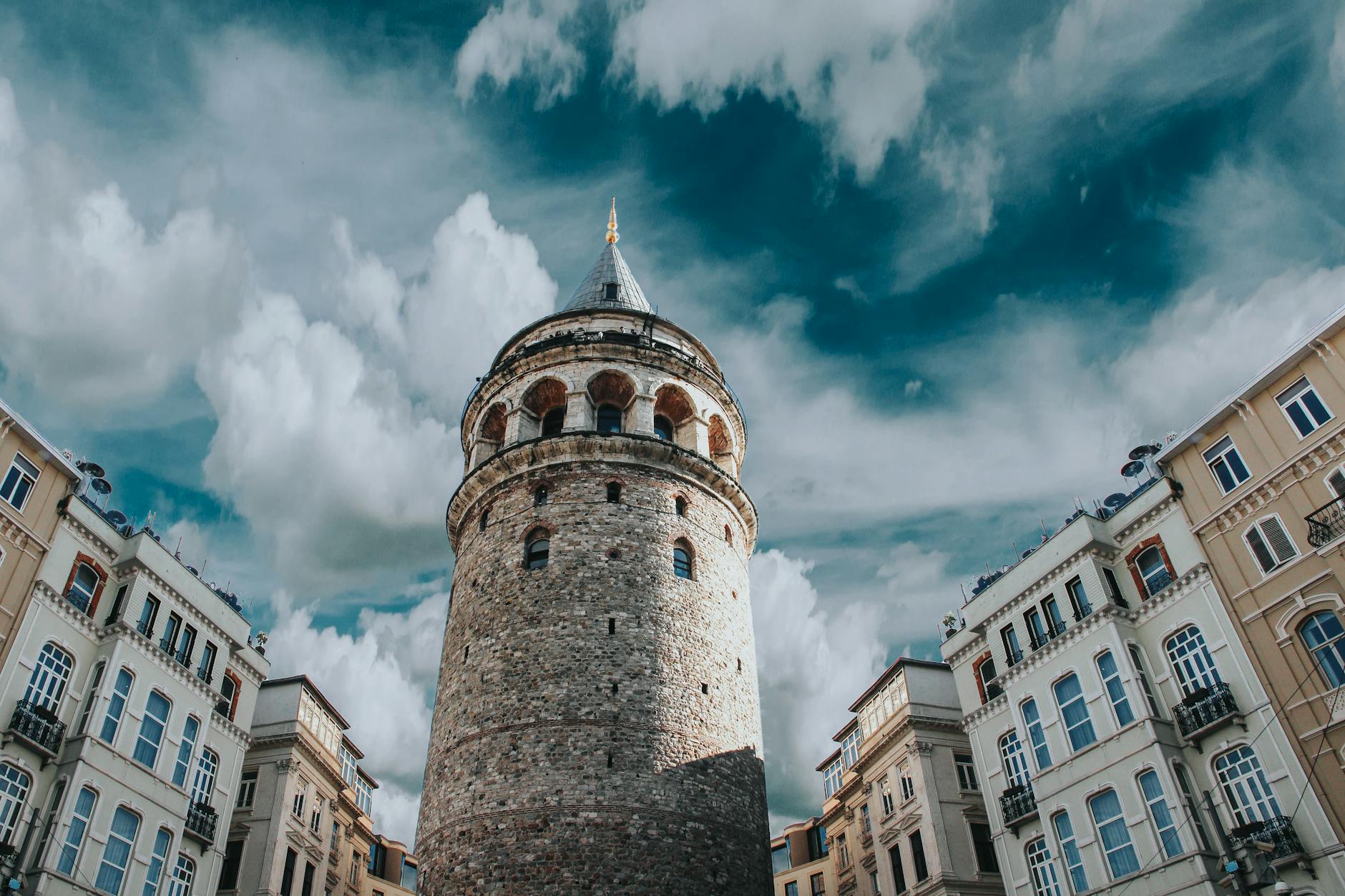
Istanbul’s changing social fabric also posed challenges. As European influence grew, so did tensions between traditionalists and reformists within the city. European embassies, businesses, and cultural institutions became more prominent, particularly in the Galata and Pera districts, introducing Western customs, fashion, and ideas. This influx created a cosmopolitan environment, but it also led to cultural clashes and debates over identity. For many, the contrast between Istanbul’s Ottoman-Islamic heritage and the new European influences highlighted the city’s complex role in a rapidly modernizing world.
Military defeats and territorial losses further weakened the empire. By the late 19th century, the Ottomans lost significant territory in Europe, the Middle East, and North Africa. Each loss not only reduced the empire’s economic base but also impacted Istanbul, where refugees from former Ottoman territories arrived, straining the city’s resources. Istanbul’s infrastructure, already in need of modernization, struggled to support its expanding population, and poverty became more visible in parts of the city.
The final blow came during World War I, when the Ottomans sided with the Central Powers and faced defeat. Following the war, Istanbul was occupied by Allied forces, marking a low point in the city’s history. Ottoman sovereignty was severely compromised, and the once-great empire was in ruins. The occupation highlighted Istanbul’s vulnerability and marked the end of its era as the Ottoman capital.
In 1923, the Republic of Turkey was established under Mustafa Kemal Atatürk, and the capital was moved to Ankara, a shift that symbolized Turkey’s break from its Ottoman past. Though no longer the capital, Istanbul remained Turkey’s largest and most influential city, poised to undergo a new chapter of modernization and transformation in the 20th century.
Modernization of Istanbul in the 20th Century
The 20th century brought profound changes to Istanbul as it transformed from the former Ottoman capital into a modern metropolis within the Republic of Turkey. Although the new capital was established in Ankara in 1923, Istanbul retained its significance as Turkey’s cultural and economic center. Under Mustafa Kemal Atatürk’s leadership, Turkey embarked on an ambitious program of modernization, secularization, and Westernization, all of which significantly affected Istanbul’s identity and development.
One of the most visible changes was the city’s shift toward a more secular society. Atatürk’s government abolished the Ottoman Sultanate and Caliphate, stripping Istanbul of its centuries-old role as the center of Islamic authority. Religious institutions were brought under state control, and Islamic schools were replaced with secular educational institutions. The Hagia Sophia, which had served as a mosque since the Ottoman conquest, was converted into a museum in 1935, symbolizing the republic’s commitment to a secular national identity.
Urban planning and infrastructure development also reshaped Istanbul. The city expanded beyond its historic peninsula, with new districts, roads, and bridges designed to support a growing population. Key infrastructure projects, like the construction of the Bosphorus Bridge in 1973, connected the city’s European and Asian sides, facilitating transportation and commerce and positioning Istanbul as a bridge between continents. This growth spurred the development of modern neighborhoods, skyscrapers, and industrial areas, all of which altered Istanbul’s appearance and functionality as a modern city.
The mid-20th century brought a wave of migration to Istanbul as people from rural areas moved to the city in search of economic opportunities. This population boom led to the rapid expansion of informal settlements, known as “gecekondus,†around the city’s outskirts. Although these areas initially lacked infrastructure, they gradually became formalized, contributing to Istanbul’s growing diversity and complexity. This period saw the city’s population swell, leading to significant demographic and cultural changes as Istanbul evolved into a multicultural urban center.
Istanbul’s modernization efforts also sparked a revival in the arts, media, and academia. The city’s universities and cultural institutions became focal points for intellectual discourse, contributing to the emergence of a vibrant arts scene. Turkish cinema, music, and literature flourished in Istanbul, making the city a hub for cultural production and innovation. Traditional Turkish art forms blended with Western influences, resulting in a unique and dynamic cultural landscape that attracted artists, writers, and intellectuals from across Turkey and beyond.
Despite these advancements, Istanbul’s rapid growth also presented challenges. The city struggled with overcrowding, traffic congestion, and pollution, and urban planning efforts often lagged behind population growth. The pressure on infrastructure led to various problems, including strained public services and a housing shortage. Additionally, Istanbul faced the threat of earthquakes, with its location near the North Anatolian Fault posing a significant risk. The 1999 Ä°zmit earthquake underscored the need for improved building regulations and disaster preparedness.
By the close of the 20th century, Istanbul had transformed into a modern, bustling metropolis that balanced its rich historical heritage with a progressive vision for the future. As Turkey’s cultural, economic, and artistic heart, Istanbul continued to attract people from all walks of life, embodying both the legacy of its Ottoman past and the spirit of Turkey’s modernization efforts.
Istanbul in the 21st Century: A Global City
In the 21st century, Istanbul has emerged as a dynamic global city, bridging continents, cultures, and histories. As Turkey’s largest city, Istanbul is a major financial, cultural, and tourism hub that attracts millions of visitors and residents from around the world. Known for its unique blend of old and new, Istanbul’s rich historical heritage exists alongside a modern skyline of skyscrapers, shopping centers, and tech-driven infrastructure, positioning it as a leading metropolis in the globalized world.
Istanbul’s economy has seen significant growth, fueled by both its strategic geographic position and Turkey’s broader economic ambitions. The city is home to numerous multinational corporations, financial institutions, and thriving industries, from textiles and manufacturing to technology and real estate. Its importance as a financial center was solidified with the establishment of the Istanbul Financial Center, a major project aimed at attracting international businesses and investors. This project seeks to position Istanbul as a major economic bridge between East and West, making it an appealing destination for investors across Europe, Asia, and the Middle East.
Infrastructure development has been key to Istanbul’s transformation. The completion of significant projects like the Marmaray Tunnel, which connects Istanbul’s European and Asian sides via an underwater rail line, exemplifies the city’s commitment to improving transportation and connectivity. The New Istanbul Airport, one of the largest in the world, has further established the city as a major travel hub. Istanbul’s three Bosphorus bridges, along with the Yavuz Sultan Selim Bridge and Eurasia Tunnel, also facilitate movement, easing the challenges of commuting across continents and reducing the city’s notorious traffic congestion.
While modernizing, Istanbul has retained and celebrated its historic sites. The Hagia Sophia, Topkapi Palace, Blue Mosque, and the Grand Bazaar continue to draw millions of tourists each year, allowing visitors to experience the city’s Byzantine, Ottoman, and Islamic heritage. In recent years, Istanbul’s government has invested in preserving these landmarks, as well as in reviving neighborhoods that showcase its multicultural legacy, such as Balat and Galata. This balance of heritage preservation and modernization has made Istanbul one of the world’s most attractive cities for travelers seeking a blend of history and contemporary culture.
However, Istanbul’s rapid growth also presents ongoing challenges. The city’s population, now over 15 million, has strained infrastructure, housing, and resources, particularly in suburban areas experiencing urban sprawl. Additionally, Istanbul faces environmental challenges, from pollution to earthquake risks due to its proximity to the North Anatolian Fault. The government has implemented urban resilience programs, introducing stricter building codes and promoting sustainable projects to address these issues.
Despite these challenges, Istanbul continues to thrive as a symbol of resilience and adaptability. The city’s vibrant arts scene, encompassing everything from classical Turkish music and traditional crafts to modern art galleries and international film festivals, reflects its role as a cultural melting pot. As Istanbul grows, it remains a testament to its historic role as a meeting point of cultures, embodying both Turkey’s rich past and its aspirations for the future. Istanbul today is not only Turkey’s pride but also a city with a global voice, where East meets West in a lively blend that continues to captivate and inspire the world.









[…] structures; it is a historical narrative that reflects the city’s evolution from Byzantium to Constantinople, and finally to Istanbul. Each era left an indelible mark on the architectural style prevalent in […]