Introduction
Mumbai, often referred to as the financial capital of India, is a bustling metropolis with a rich and complex history. What was once a small group of seven islands has evolved into one of the most populous cities in the world, a global hub for finance, trade, and entertainment. This transformation over several centuries was driven by a confluence of geographical, political, and economic factors that shaped Mumbai into the city we know today. This article delves into the early history of Mumbai, the influence of colonial powers, and the city’s rise as a commercial powerhouse.
The Seven Islands: Mumbai’s Geographical Beginnings
Mumbai’s origins can be traced back to the seven islands that comprised the region: Bombay, Colaba, Old Woman’s Island, Mahim, Mazagaon, Parel, and Worli. These islands were originally inhabited by indigenous communities like the Kolis, who lived off fishing and farming. The earliest recorded history of the islands dates back to the 3rd century BCE, when the region was part of the Maurya Empire under Emperor Ashoka. During this time, the islands were known for their Buddhist presence, with several rock-cut caves like the ones in Kanheri and Elephanta serving as places of worship and meditation.
Mumbai’s geographical location, on the western coast of India facing the Arabian Sea, made it strategically significant for trade. Yet, in its early days, the islands were largely ignored by major powers due to their swampy, uninhabitable nature, and a lack of fresh water sources. However, this was soon to change as regional powers, and eventually European colonizers, realized the potential of these islands as a trading post.
Early Influence: Hindu and Muslim Dynasties
The seven islands came under various Indian dynasties during the first millennium CE. The Silhara dynasty, which ruled from the 9th to the 13th centuries, significantly shaped the early history of Mumbai. The Silharas built several temples, fortifications, and settlements across the islands, many of which still exist in ruins today. Their reign saw the islands being used as a stopover for sea trade, although the development of a significant port was still a long way off.
By the 14th century, the islands were under the control of the Gujarat Sultanate, a powerful Muslim dynasty that ruled over large parts of western India. The Sultanate saw the islands’ strategic value in controlling sea routes, and as a result, they fortified them. However, it was under the Sultanate that the islands’ isolation began to diminish, and the groundwork was laid for the transformation into a more interconnected region.
The Portuguese Era: Bombay Comes into Focus
In 1534, the islands came under Portuguese control following the defeat of the Gujarat Sultanate. The Portuguese referred to the islands as “Bombaim,” meaning “Good Bay” in Portuguese, highlighting the natural harbor’s significance. They established a foothold on the islands, building fortifications and introducing Catholicism through missionaries. The Portuguese built several churches, some of which, like St. Andrew’s Church in Bandra, still stand today as testaments to their rule.
During their time, the Portuguese leased the islands to various merchants and landlords, mainly Parsis, Jews, and other communities that migrated to the region for trade. The most significant contribution of the Portuguese, however, was their role in bringing Bombay to the attention of other European powers. The islands became a bone of contention between the Portuguese and other European nations, especially the British, who were rapidly expanding their empire in India.
The British Takeover: A Turning Point in Mumbai’s History
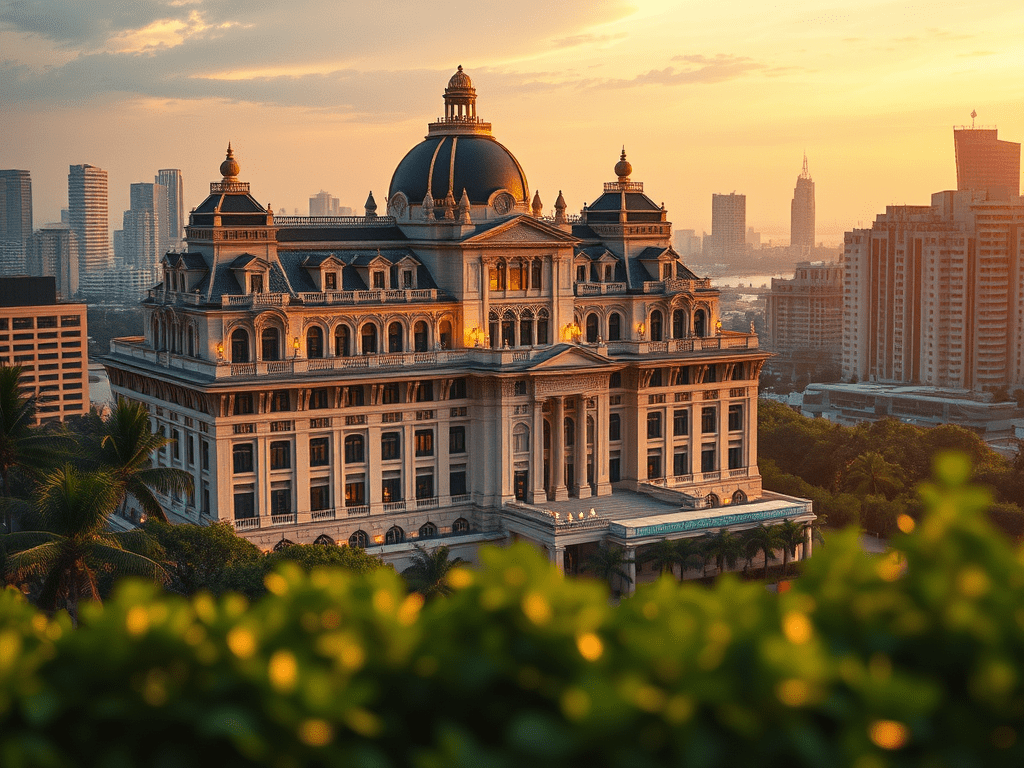
The turning point in Mumbai’s history came in 1661 when King Charles II of England married Catherine of Braganza, the daughter of the King of Portugal. As part of Catherine’s dowry, the Portuguese ceded the islands of Bombay to the British crown. Initially, the British did not recognize the potential of the islands and even attempted to lease them to the East India Company for a modest fee. However, in 1668, the East India Company took over control of Bombay, and this marked the beginning of a new era.
The British, unlike the Portuguese, had a grander vision for the islands. They saw Bombay’s potential as a major port, particularly as a counterbalance to the more established Portuguese port of Goa. The East India Company began constructing infrastructure, including fortifications and docks. They also encouraged migration to the islands by offering land grants and other incentives to traders, craftsmen, and laborers. As a result, Bombay began to grow rapidly, attracting a diverse population of Parsis, Gujaratis, Muslims, and Jews.
Reclamation and Urban Development: The Birth of Modern Mumbai
One of the most significant challenges faced by the British in Bombay was the islands’ geography. The seven islands were separated by creeks and marshlands, making it difficult to develop a cohesive city. To overcome this, the British embarked on an ambitious series of land reclamation projects. The most notable of these was the Hornby Vellard project, initiated in 1782 by William Hornby, then Governor of Bombay. The project involved the construction of embankments to prevent flooding and connect the islands.
Over the next century, several other reclamation projects were undertaken, transforming the once fragmented islands into a continuous landmass. By the mid-19th century, the British had succeeded in creating a unified city, which they began to develop as a major commercial hub. They built infrastructure such as roads, railways, and docks to support the growing trade, particularly in cotton and opium, which were the main exports from Bombay.
The arrival of the Great Indian Peninsula Railway in 1853, which connected Bombay to the hinterland, was another game-changer for the city’s development. It facilitated the movement of goods and people, further fueling the city’s growth.
The Cotton Boom and Bombay’s Rise as a Commercial Hub
Bombay’s real rise to prominence came during the American Civil War (1861-1865), when cotton supplies from the southern United States were cut off. This led to a massive surge in demand for Indian cotton, and Bombay, with its well-established port and rail connections, became the epicenter of the global cotton trade. The cotton boom brought immense wealth to the city, leading to the construction of grand public buildings, banks, and institutions, many of which still dominate Mumbai’s skyline today.
Prominent Indian merchants, especially from the Parsi community, such as Jamsetjee Jejeebhoy and David Sassoon, played a crucial role in Bombay’s rise as a commercial hub. They invested heavily in the city’s development, building schools, hospitals, and libraries. The wealth generated during this period laid the foundation for Bombay’s transformation into a modern city.
Political Movements and the Struggle for Independence
As Bombay grew in economic stature, it also became a center for political activity, particularly in the late 19th and early 20th centuries. The city played a key role in the Indian independence movement, with leaders like Bal Gangadhar Tilak using the city as a base for organizing protests and rallies against British rule. The Quit India Movement in 1942, which was launched by Mahatma Gandhi, saw massive participation from Bombay’s citizens.
Bombay’s cosmopolitan nature made it a melting pot of ideas, and it became home to both moderate and radical voices in the independence struggle. The city’s working-class neighborhoods, particularly the textile mill areas, became hotbeds of union activity and protests against colonial policies.
Post-Independence Mumbai: A Global City
With India’s independence in 1947, Bombay’s importance as a commercial and cultural hub only grew. The city became the capital of the state of Maharashtra and continued to attract migrants from all over India, contributing to its rapid urbanization. In 1995, the city’s name was officially changed from Bombay to Mumbai, reflecting its Marathi heritage and honoring the local deity Mumbadevi.
Today, Mumbai is one of the world’s largest and most dynamic cities, known for its stock exchange, Bollywood film industry, and thriving business community. It continues to be a symbol of India’s progress and resilience, a city that has embraced its past while constantly evolving.
Conclusion
The foundation of Mumbai is a story of transformation—of islands that once seemed insignificant becoming the heart of a global city. From its early days as a small fishing community to its role as a British trading post and eventual rise as an economic powerhouse, Mumbai’s history is a testament to its strategic importance and the resilience of its people. Today, it stands as a vibrant, diverse city, a microcosm of India itself, shaped by centuries of migration, commerce, and cultural exchange.