Introduction
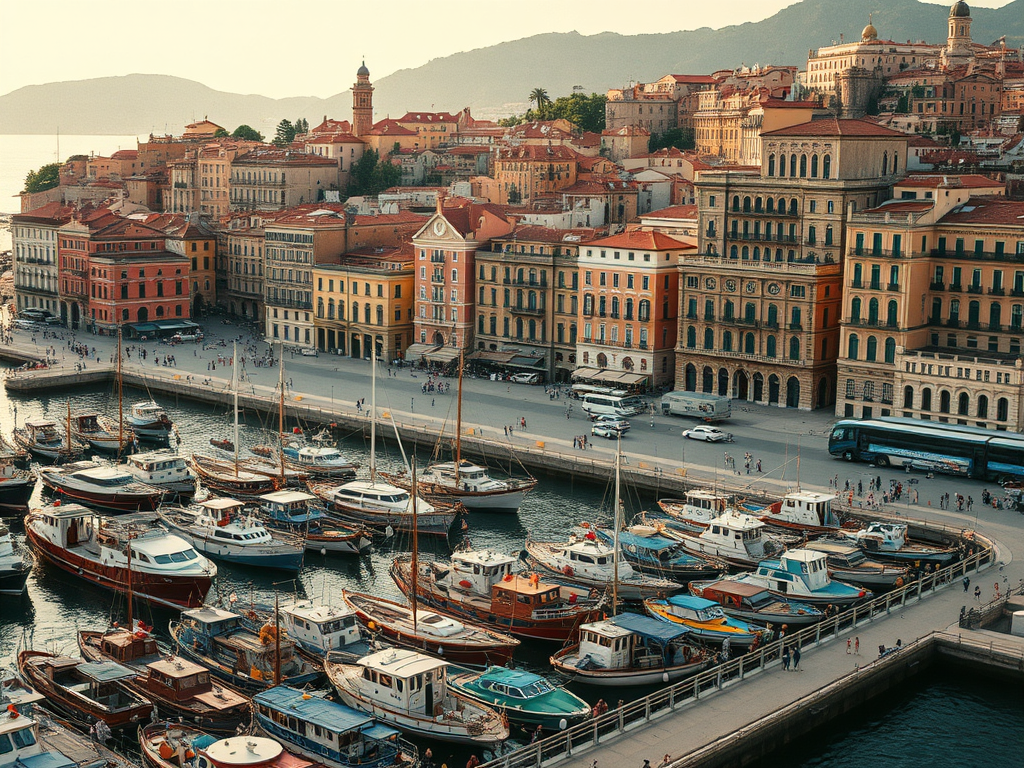
Genoa, a vibrant port city in the northwest of Italy, has a history as captivating and intricate as its labyrinthine streets. Known as “La Superba” (The Proud), Genoa has played a crucial role in the Mediterranean world for centuries. As the capital of the Liguria region, it boasts a legacy of exploration, trade, art, and political significance that rivals any other in European history. The history of Genoa is one of resilience and adaptation, as the city transitioned from a powerful maritime republic to a modern, bustling metropolis. This article delves into the rich and multifaceted history of Genoa, tracing its evolution from ancient times through the height of its naval and commercial power in the Middle Ages, to its role in Italian unification and beyond.
Ancient Origins and Roman Rule
Genoa’s origins stretch back to prehistoric times, with archaeological evidence suggesting that Ligurian tribes inhabited the region as early as the 5th millennium BCE. These tribes were known for their seafaring skills and their interactions with other Mediterranean civilizations, such as the Phoenicians and Greeks. The first recorded name of the settlement that would become Genoa was “Stalia,†and it was an important trading center due to its strategic location on the Ligurian Sea.
By the 3rd century BCE, the area came under Roman influence as part of the broader Roman conquest of the Italian peninsula. Genoa, then known as Genua, became a Roman municipium and thrived as a trading hub, connecting the Italian hinterlands to the Mediterranean. The city was important for supplying Rome with goods from Gaul and Spain, including metals, wine, and olive oil. During the Punic Wars, Genoa played a key role in supporting Rome against the Carthaginians. However, the city suffered significant damage when it was sacked by Carthaginian general Mago in 205 BCE. Despite this setback, the city was rebuilt and prospered under Roman rule.
After the collapse of the Western Roman Empire in the 5th century CE, Genoa, like much of Italy, was caught in a turbulent period of invasions by barbarian tribes. The Ostrogoths and later the Lombards controlled the region, which led to a decline in trade and urban life. However, Genoa’s natural harbor remained vital, and the city’s maritime tradition would prove essential in its future rise.
The Rise of the Genoese Republic
By the early Middle Ages, Genoa began to recover from the disruptions of the post-Roman period. Its strategic location allowed it to rebuild its economy based on maritime trade. However, it wasn’t until the 11th century that Genoa began to emerge as a powerful maritime republic, alongside other Italian city-states like Venice, Pisa, and Amalfi. Genoa’s rise was fueled by its ability to exploit its naval capabilities, engaging in trade and military ventures throughout the Mediterranean.
In 1096, Genoa played a significant role in the First Crusade by providing ships and military support to the crusaders. In return, the city gained important trading privileges in the Crusader states, which allowed it to expand its commercial empire in the Eastern Mediterranean. The Genoese established colonies and trading posts in key cities like Constantinople, Acre, and Antioch, as well as along the coasts of North Africa and the Black Sea. Genoa’s powerful navy enabled it to protect its interests and compete with rival maritime powers, especially Venice.
By the 12th century, Genoa had established itself as an independent republic with a complex system of governance. The city was ruled by a series of consuls, and later by a doge (duke), who was elected by the nobility. The Genoese aristocracy was divided into factions, with powerful families like the Doria, Grimaldi, Spinola, and Fieschi competing for influence. Despite internal conflicts, Genoa’s maritime prowess continued to grow, and by the 13th century, it had become one of the dominant trading powers in the Mediterranean.
One of Genoa’s greatest contributions to global exploration came in 1451 with the birth of Christopher Columbus, arguably the city’s most famous son. Though Columbus sailed under the Spanish flag, his Genoese origins are a point of great pride for the city, and his explorations would later have a profound impact on European history.
The Height of Genoese Power: Trade, Finance, and Conflict
Genoa reached the height of its power in the late Middle Ages, particularly during the 13th and 14th centuries. The city’s wealth was built on its maritime trade, which included everything from spices and silk to slaves and gold. The Genoese also became renowned for their shipbuilding industry, constructing large, fast ships that could carry goods and troops across vast distances.
One of the most significant aspects of Genoa’s economic power was its financial expertise. By the late 13th century, Genoese bankers had become the financiers of European monarchs, including the kings of France and Spain. The city’s financial institutions pioneered many of the practices that would later become standard in modern banking, such as the issuance of credit and the use of promissory notes. This financial acumen allowed Genoa to exert influence far beyond its borders, and the city became known as the “Bankers of Europe.â€
However, Genoa’s success was not without challenges. The city was engaged in a bitter rivalry with Venice, another powerful maritime republic. The two cities clashed in a series of conflicts known as the Genoese-Venetian Wars, which spanned several centuries. These wars were fought primarily over control of trade routes and colonies in the Eastern Mediterranean. The most famous of these conflicts was the War of Chioggia (1378-1381), in which Genoa initially gained the upper hand but ultimately failed to defeat Venice. Although Genoa survived the conflict, the war weakened its naval and financial power.
Another significant blow to Genoa’s prosperity came in the form of the Black Death, which swept through Europe in the mid-14th century. As a major port, Genoa was particularly vulnerable to the plague, which decimated the city’s population and disrupted trade for years. Despite these challenges, Genoa continued to be a major player in Mediterranean commerce and politics.
The Decline and Spanish Influence
The 15th and 16th centuries saw a gradual decline in Genoa’s power as the global balance of trade shifted. The discovery of the Americas and new trade routes to Asia reduced the importance of Mediterranean commerce, and Genoa struggled to adapt to the changing economic landscape. Furthermore, internal strife between the city’s powerful families, as well as external pressures from foreign powers, weakened the republic.
In 1528, the city underwent significant political reform under the leadership of Andrea Doria, one of Genoa’s most influential figures. Doria, a naval commander and statesman, restructured the government and established a more stable oligarchic system. He also aligned Genoa with the Spanish Habsburgs, which brought the city into the Spanish sphere of influence. Under Spanish protection, Genoa regained some of its former prosperity, particularly through its financial dealings with the Spanish crown. Genoese bankers became instrumental in funding Spain’s imperial ambitions, particularly in the Americas.
However, Genoa’s dependence on Spain also made it vulnerable to the fortunes of the Spanish Empire. As Spain’s power waned in the 17th century, so too did Genoa’s influence. The city’s financial institutions began to decline, and its maritime power was eclipsed by rising European powers like France and the Netherlands.
The Napoleonic Era and the End of the Republic
The 18th century was a period of continued decline for Genoa, as the city struggled to maintain its independence in the face of rising European powers. By the late 18th century, the Genoese Republic was a shadow of its former self. In 1797, Napoleon Bonaparte’s forces invaded northern Italy, and Genoa was forced to abandon its republican government. Under French control, the old Genoese Republic was replaced by the Ligurian Republic, a satellite state of the French Empire.
Napoleon’s defeat in 1815 led to the Congress of Vienna, which redrew the map of Europe. As part of the settlement, Genoa was annexed to the Kingdom of Sardinia (later the Kingdom of Italy). This marked the end of Genoa’s centuries-old independence, and the city was absorbed into the new political order of Italy.
Genoa in Modern Italy: Industrialization and Unification
Despite the loss of its independence, Genoa continued to play a significant role in Italy’s political and economic development. In the 19th century, the city became an important center of the Italian unification movement, known as the Risorgimento. Genoese patriots like Giuseppe Mazzini were instrumental in the push for Italian unity, and the city was a hotbed of revolutionary activity.
In the decades following unification, Genoa underwent significant industrialization. Its port remained one of the most important in Italy, and the city became a center for shipbuilding, steel production, and manufacturing. The development of railroads further enhanced Genoa’s position as a key commercial hub, connecting northern Italy with the rest of Europe.
Genoa Today: A City of History and Innovation
Today, Genoa is a dynamic city that balances its rich historical legacy with modern industry and innovation. Its port remains one of the busiest in the Mediterranean, and the city has become a center for finance, technology, and education. Genoa’s historic center, with its narrow alleyways and medieval buildings, is a UNESCO World Heritage site, attracting tourists from around the world.
The city’s enduring legacy as a maritime power and financial innovator continues to shape its identity, making Genoa a living testament to its storied past.