

Introduction
The Manhattan Project stands as a pivotal chapter in modern history, marking the dawn of the nuclear age and forever changing the geopolitical landscape. Initiated during World War II, this monumental undertaking brought together some of the greatest scientific minds of the time to develop a new weapon of unprecedented power: the nuclear bomb. The urgency was driven by fears that Nazi Germany might succeed in creating such a weapon first. As the project unfolded, it not only accelerated advancements in physics and engineering but also sparked ethical debates and dilemmas that continue to resonate today. This article will delve into the history of the nuclear bomb, exploring how the Manhattan Project transformed warfare, international relations, and scientific inquiry, while also reflecting on its profound implications for humanity.
Origins and Development of the Manhattan Project
The birth of the Manhattan Project can be traced back to the early 20th century, as scientists made groundbreaking discoveries in the field of nuclear physics. The core concept of splitting an atom to release vast amounts of energy was nascent, not fully understood until the 1930s. Key figures like Albert Einstein and Leo Szilard were pivotal in alerting the United States government to the potential of nuclear fission and the dangers of a potential Nazi nuclear program. Concerned about the ramifications of an atomic bomb falling into enemy hands, President Franklin D. Roosevelt authorized the formation of the Manhattan Project in 1942.
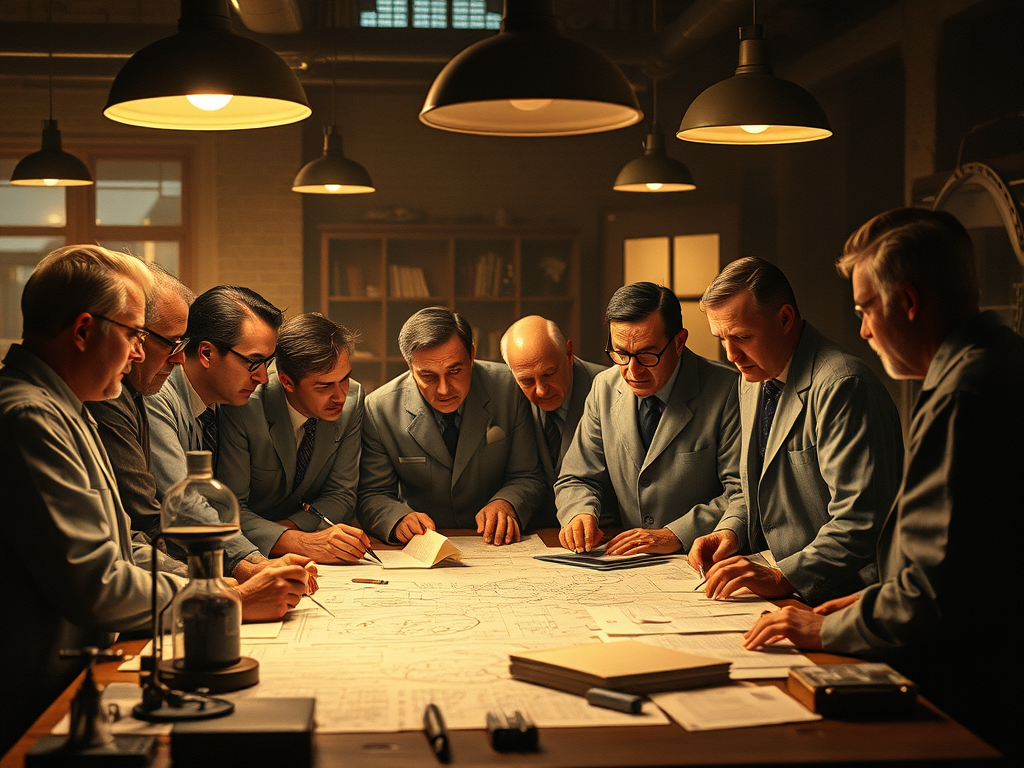
The project itself was an enormous collaboration involving thousands of physicists, chemists, and engineers, coordinated by the U.S. Army Corps of Engineers. Officially directed by General Leslie Groves and scientific director J. Robert Oppenheimer, the project spanned multiple locations across the United States, including Los Alamos, Oak Ridge, and Hanford. Each site played a critical role in the research, development, and production of the nuclear bomb.
The early phases of the Manhattan Project focused on intensive research into Uranium-235 and Plutonium-239, the two isotopes that could sustain a nuclear chain reaction. Key experiments were conducted to determine the feasibility of detecting and utilizing these isotopes. Researchers worked painstakingly to separate pure uranium through methods such as gaseous diffusion, electromagnetic separation, and later, liquid thermal diffusion.
As the project progressed, several technologies were developed to enable the successful detonation of an atomic bomb. The work being undertaken in Los Alamos included theoretical calculations and tests of the critical mass needed for a nuclear explosion, a concept deeply rooted in the understanding of neutron multiplication. As Oppenheimer and his team endeavored to theorize the bomb’s design, they faced the reality of engineering challenges, ensuring that the bomb would work under the necessary conditions.
Bridging science and engineering was imperative as the potential of atomic bombs had to be translated into practical applications. By 1945, there was a working design. The first successful test, called Trinity, took place in July 1945 in New Mexico, culminating years of effort and propelling humanity into a new era characterized by both hope and fear for the future.
The Engineering Marvels Behind the Nuclear Bomb
The creation of the nuclear bomb was not merely a scientific achievement; it was a formidable engineering feat that involved unprecedented coordination and ingenuity. Building a weapon capable of unleashing atomic energy required overcoming significant technical challenges, leading to various innovations still relevant today.
To begin with, the Manhattan Project had to ensure the production of sufficient fissile material—either Uranium-235 or Plutonium-239. The intricate process of enriching uranium was nothing short of groundbreaking. The Oak Ridge facility was home to several methods of uranium enrichment, including gaseous diffusion and electromagnetic separation. This was no trivial matter, as the proportion of Uranium-235 in natural uranium was a mere 0.7%, necessitating enormous quantities of material to obtain the necessary amounts for an explosive device.
Once the requisite materials were available, the next engineering challenge was the design of the bomb itself. The ultimate goal was to construct a weapon that would effectively initiate and sustain a rapid nuclear chain reaction, resulting in a massive release of energy. The design variations explored included the “gun-type” design used in the bomb dropped on Hiroshima, known as “Little Boy,” and the “implosion” method used for “Fat Man,” which was detonated over Nagasaki.
The “gun-type” system involved firing a projectile of Uranium-235 into a target of the same material, achieving critical mass. Meanwhile, the implosion design featured a spherical assembly of plutonium encased in a shell of conventional explosives. This method allowed for a more compact bomb and significantly improved efficiency through a symmetrical compressive wave, an innovation born from the rigorous physics calculations carried out by scientists at Los Alamos.
Moreover, the test at Trinity revealed the importance of incorporating advanced detonation mechanisms. The fuse and detonation systems had to function flawlessly to ensure the bomb’s detonation would occur at the right moment. The meticulous precision required in timing and triggering the devices underlined the substantial engineering challenges involved.
The legacy of the engineering behind the nuclear bomb also showcases the immense collaboration among scientists and engineers from diverse fields, all working towards a common goal amid the backdrop of wartime urgency. Securing such expertise in areas like mechanical engineering, physics, and detonator technology formed a wellspring of inventions and practices—a testament to human innovation and resourcefulness when placed under profound societal pressure.
The Fallout: Ethical Consequences and Public Reception
The ethical ramifications of the Manhattan Project and the eventual use of nuclear weapons have been subjects of intense debate, sparking profound questions about morality and necessity in warfare. The widespread expansion of the nuclear bomb’s destructive power engendered not only fear but also philosophical and moral dilemmas for scientists, military leaders, and civilians alike.
As news of the atomic bomb’s development slipped into public consciousness, opinions were polarized. On one hand, many in the scientific community justified the bomb’s use as a means to accelerate the end of World War II and save countless lives that would have been lost in a prolonged conflict. On the other hand, as details of the bombings in Hiroshima and Nagasaki emerged, critics began voicing alarm over the indiscriminate devastation wrought upon civilian populations. The death tolls in both cities reached into the hundreds of thousands, not to mention the lasting aftermath of radiation exposure that would affect generations to come.
In the years that followed, various ethical positions emerged, reframing the narrative surrounding the nuclear bomb. Prominent figures, such as physicists Leo Szilard and Albert Einstein, expressed regret and concern over the bomb’s deployment. Szilard, originally a proponent of the bomb’s development to deter the Nazis, became an advocate for its non-use, citing moral concerns about civilian casualties and the broader implications of nuclear warfare.
Public perception evolved rapidly in response to the bombings. Initially, there was a sense of relief and vindication within wartime America; however, this sentiment transformed into anxiety as the realities of nuclear fallout became widely understood. The advent of nuclear weapons reshaped the public’s view of war, politics, and security, leading to a paranoia that defined the Cold War era. Bomb shelters became a common feature in American backyards, and government campaigns warned citizens about the potential for nuclear annihilation.
Nuclear ethics also ushered in a wave of anti-nuclear movements. Activists, scientists, and thinkers rallied to speak against the continuation of nuclear arms development, advocating for disarmament and peace. The profound realization that humanity now possessed the means to end itself forced leaders and ordinary citizens alike to reconsider their positions regarding war-fighting strategies.
The Manhattan Project and its legacy challenge us to consider how power, technology, and morality intersect. As humanity advanced into the nuclear age, grappling with the ethical consequences of its own inventions became an essential aspect of public discourse and policy, reminding future generations of the costs associated with such immense power.
The Cold War and Proliferation of Nuclear Weapons
With the conclusion of World War II, the geopolitical landscape shifted dramatically as the United States and the Soviet Union emerged as superpowers, setting the stage for the Cold War. The legacy of the Manhattan Project was an arms race rooted in the burgeoning threat of nuclear weapons, influencing international relations profoundly.
The atomic bombs dropped on Hiroshima and Nagasaki demonstrated the overwhelming power of nuclear weapons, establishing a precedent that would dominate military strategy and policy for decades to come. In the early years of the Cold War, the U.S. sought to maintain its nuclear superiority, leading to significant investments in weapons development and stockpiling.
As nuclear capabilities evolved, the Soviets responded in kind, developing their own atomic bomb by 1949. The fear of mutually assured destruction (MAD) became a cornerstone of military strategy for both nations, fostering a tense atmosphere of nuclear deterrence. Each side engaged in a relentless pursuit of superiority, leading to the development of hydrogen bombs, intercontinental ballistic missiles (ICBMs), and various delivery systems meant to sustain active deterrence.
The Cold War also birthed a series of crises, including the Cuban Missile Crisis, where the world stood on the brink of nuclear conflict. The sheer possibility of nuclear war led to widespread societal fear, prompting various nations to rethink their policies surrounding nuclear weapons. Various treaties surfaced during this period, such as the Partial Nuclear Test Ban Treaty (1963) and the Non-Proliferation Treaty (1968), aimed at curbing nuclear arms races while promoting peaceful uses of nuclear energy.
The necessity for diplomacy amidst such tensions highlighted the critical role of nuclear weapons in shaping international relations. While the anticipation of war shaped foreign policies, it also led to launching a series of disarmament talks. The intersection of technological advancements and geopolitical strategies forged a new reality where nuclear arsenals influenced diplomacy, alliances, and often dictated decision-making processes.
As nuclear weapons proliferated, nations around the globe began to embark on their respective paths to nuclear capability. Countries like China, France, and the United Kingdom joined the ranks, altering the dynamics of global power and provoking further anxieties over regional conflicts.
Ultimately, the Cold War era illustrated the dual-edged sword of the Manhattan Project’s legacy: the immense scientific and military advancements catalyzed by the atomic age were matched by ethical concerns and strategic challenges that reshaped the course of modern history. As nations navigated a precarious balance between power and peace, the enduring impact of nuclear weapons would echo throughout decades of global politics.
Nuclear Energy: From Weapon to Power Source
Despite the ominous beginnings of nuclear technology, the insights gained from the Manhattan Project have transformed into a significant pathway toward cleaner and more sustainable energy production. In the subsequent decades, a portion of the global community sought to harness nuclear power for peaceful applications, recognizing its potential to provide substantial quantities of energy without the greenhouse gas emissions associated with traditional fossil fuels.
The development of civil nuclear energy began in earnest in the 1950s, as governments were eager to demonstrate the benefits of nuclear technology. The first commercial nuclear power plant began operations in Shippingport, Pennsylvania, in 1958. This marked the transition of nuclear technology from a strictly military tool to a viable energy source.
Utilizing the basic principles of nuclear fission, reactors were designed to generate electricity through controlled reactions. Countries around the world—such as France, Japan, and the United States—invested heavily in constructing nuclear reactors, raising hopes for energy independence and economic growth. By capitalizing on the technological advancements made during the Manhattan Project, the burgeoning civil nuclear energy sector expanded rapidly.
However, the wild optimism surrounding civil nuclear power came with its challenges. Accidents like Three Mile Island (1979) and Chernobyl (1986) highlighted the potential risks of nuclear energy and sparked widespread public fear and opposition. The repercussions of such incidents instigated debates about safety, containment, and regulatory measures. They served as stark reminders of the dual-edged nature of nuclear technology, rooted in its origins as a weapon of warfare.
In recent years, the discussion surrounding nuclear power has gained renewed vigor, especially with growing concerns about climate change and the need for sustainable energy solutions. Proponents argue that nuclear energy offers a robust solution to meet rising energy demands while minimizing carbon footprints. As modern designs emerge—including small modular reactors (SMRs) and advanced reactors—there is potential for a safer and more efficient energy source that acknowledges lessons learned from past mistakes.
The intersection of nuclear technology and energy production illustrates how the legacy of the Manhattan Project remains embedded in contemporary society. Balancing energy needs while addressing safety and waste management issues will be necessary as nations navigate the future of global energy systems.
Conclusion
The history of the nuclear bomb and the transformative impact of the Manhattan Project is a complex narrative, marked by extraordinary scientific advancements, moral challenges, and geopolitical tensions. From its inception during World War II through the Cold War and into contemporary discussions about nuclear energy, the implications of this project are far-reaching and multifaceted. It has shaped international politics, driven ethical debates, and redefined the relationship between humanity and technology.
As we look to the future, the lessons garnered from the past are crucial. The creation and use of the nuclear bomb remind us of the responsibility that accompanies scientific innovation. As legacy strains evolve, understanding how to navigate the fine line between pursuit of power for good and the potential for destruction is paramount. The challenge of harnessing the dual nature of nuclear technology—both destructive and constructive—provides a captivating lens through which we can examine our responsibilities toward the environment, international peace, and future energy sustainability.
Sources
- “The Manhattan Project: An Interactive History,” Atomic Heritage Foundation. https://www.atomicheritage.org/history/manhattan-project-interactive-history
- “Inside the Manhattan Project,” U.S. Department of Energy. https://www.energy.gov/articles/inside-manhattan-project
- “Nuclear Power and the Future,” World Nuclear Association. https://world-nuclear.org/information-library/current-and-future-generation/nuclear-power-and-the-future.aspx
- “Ethics and the Use of Nuclear Weapons,” American Journal of Public Health. https://www.ncbi.nlm.nih.gov/pmc/articles/PMC1360798/
- “The Cold War: A New History,” John Lewis Gaddis. https://www.penguinrandomhouse.com/books/61745/the-cold-war-by-john-lewis-gaddis/








[…] Atomic Bombs: Utilize nuclear fission—the⤠splitting of ​heavy atoms (like uranium or⢠plutonium). […]