Tag: War
-
The Legacy of the Korean War Armistice: A Historical Perspective

The Korean War (1950-1953) had a notable impact on East Asia’s political landscape, culminating in the Korean War Armistice signed on July 27, 1953. This agreement, which halted active conflict, also created a long-lasting, fragile peace that continues to define North and South Korea’s relations. Originating from post-World War II ideological divisions, the war was marked by escalating tensions, significant battles, and military strategies influenced by Cold War dynamics. Despite ceasing hostilities, the absence of a formal peace treaty has perpetuated division, militarisation, and ideological differences, affecting both Koreas’ identities and international relations for decades.
-
The History of the Treaty of Versailles: A Defining Moment in Global Diplomacy

The Treaty of Versailles, signed on June 28, 1919, concluded World War I and sought to reshape global order. It aimed to address the victors’ grievances while imposing harsh reparations and territorial losses on Germany, causing widespread resentment that foreshadowed future conflicts, including World War II. The treaty established the League of Nations, intended to promote peace but struggled due to its lack of authority, particularly after the United States did not join. Its punitive measures led to socio-economic turmoil in Germany, fostering extremist ideologies and instability in Europe. The treaty’s legacy still influences international relations today.
-
The History of World War II: A Comprehensive Overview

World War II, spanning from 1939 to 1945, significantly reshaped global politics, economy, and society. Rooted in the grievances from the Treaty of Versailles, the conflict was triggered by Germany’s aggressive expansion under Hitler. Key battles, including the Normandy landings and Stalingrad, were pivotal in turning the tide. The home front witnessed dramatic societal changes, such as increased female workforce participation and the horrors of internment. Technological advancements transformed warfare, with the introduction of tanks and atomic bombs reshaping military strategies. The war’s aftermath saw the establishment of the United Nations and the onset of the Cold War, leaving an…
-
The History of the American Independence War

The American Independence War (1775-1783) was a crucial conflict marking the colonies’ fight against British rule, inspired by desires for autonomy and Enlightenment ideals. Key grievances included “taxation without representation” and increased British control. Notable battles like Lexington, Trenton, and Saratoga showcased American resilience, with crucial foreign alliances, particularly with France, securing military support. Influential figures such as George Washington, Thomas Jefferson, and Benjamin Franklin played vital roles in the war and the subsequent formation of a national identity. The war’s aftermath led to the Treaty of Paris, the U.S. Constitution, and inspired global movements for liberty and self-governance.
-
Understanding the American Civil War: A Historical Overview
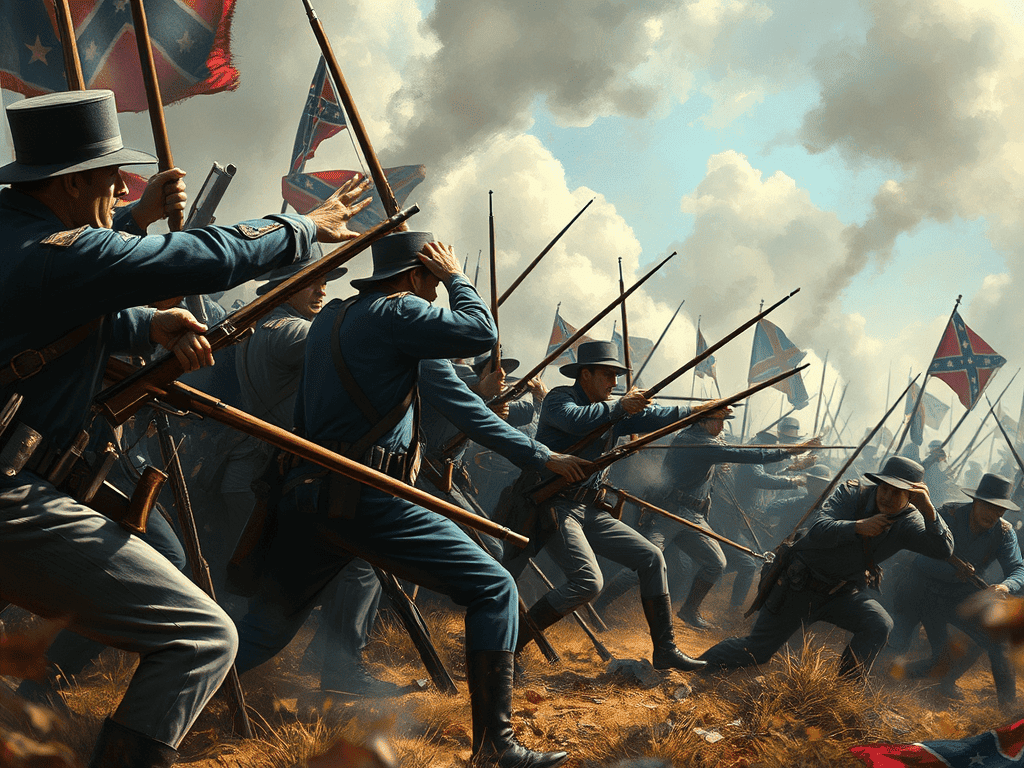
The American Civil War (1861-1865) fundamentally transformed the United States, resulting from deep-rooted tensions over slavery, economic differences, and political ideologies between the North and South. Key battles, such as Gettysburg and Antietam, highlighted the conflict’s human cost and the evolving military strategies from both sides. The war led to significant societal changes, including the abolition of slavery and shifts in gender roles as women assumed new responsibilities. The Reconstruction era aimed to integrate freed slaves and rebuild the South, but it faced significant resistance and ultimately failed to achieve lasting equality, illustrating the ongoing struggle for civil rights in…