Introduction
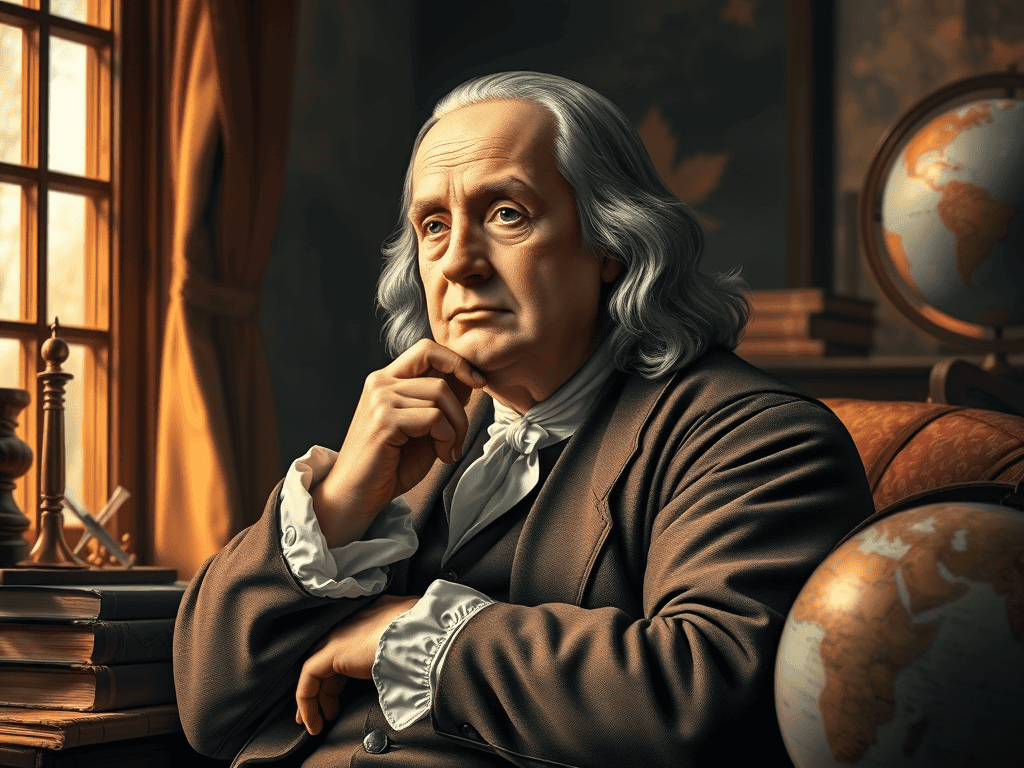
Benjamin Franklin stands as one of the most influential figures in American history, embodying the spirit of the Enlightenment and embodying the virtues of innovation, diplomacy, and civic responsibility. Born in 1706 in Boston, Franklin carved a unique path through various domains, including science, politics, and literature, establishing himself as a polymath who significantly shaped the young nation’s identity. His relentless pursuit of knowledge led to inventions that revolutionized daily life and advancements in a myriad of fields, earning him a place in the annals of history as a pioneering thinker. Beyond his scientific achievements, Franklin’s role in the American Revolution and his advocacy for unity among the colonies demonstrate his commitment to the ideals of democracy and governance. This article explores the life, work, and enduring legacy of Benjamin Franklin through detailed analysis, showcasing his multifaceted contributions that continue to resonate today.
Early Life and Education of Benjamin Franklin
Born on January 17, 1706, in Boston, Massachusetts, Benjamin Franklin was the fifteenth of seventeen children born to Josiah Franklin, a candle maker, and his wife, Abiah Folger. His early upbringing in a modest household instilled in him the values of hard work, thriftiness, and education. Benjamin’s formal education was cut short at the age of 10 when he was taken out of school to work in his father’s shop. Nevertheless, he continued to pursue knowledge on his own, developing a voracious appetite for reading. He explored a variety of subjects, including science, philosophy, and literature, which set the foundation for his future endeavors.
At a young age, Franklin became an apprentice to his older brother James, who published a newspaper called the New England Courant. This experience ignited Benjamin’s passion for writing and journalism. He often contributed anonymous articles, demonstrating his wit and intelligence at just 16 years old. Despite the close bond and conflicts with his brother, this period was crucial in shaping Franklin’s views on freedom of the press and the importance of public discourse.
Franklin’s desire for self-improvement prompted him to create a plan of self-education. He compiled a list of important authors and works, including classics from notable philosophers like Aristotle and Cicero, which he read extensively. This dedication to learning would later influence his approach to life, emphasizing the pursuit of knowledge and intellectual growth. He also established a lending library in 1731, which made literature accessible to the public; this initiative demonstrated his belief in the power of education in uplifting society.
Another significant influence in Franklin’s early life was the Enlightenment, a European intellectual movement that emphasized reason, science, and individualism. This environment inspired Franklin to adopt a pragmatic approach to problems, emphasizing empirical evidence and observation. He was influenced by figures such as Isaac Newton, often reflecting on their theories and applying them to his own experiments in science.
Despite his lack of formal education, Franklin’s relentless curiosity and resourcefulness led him to develop practical skills. He became a successful businessman, first in the printing industry and later through various ventures. His work ethic, combined with his innovative ideas, allowed him to amass wealth and establish a reputation as a prominent figure in Philadelphia, where he eventually moved.
Ben Franklin’s early life serves as a testament to the importance of education and self-reliance. The values he cultivated during his formative years greatly influenced his later achievements and contributions to society. His diverse experiences and relentless pursuit of knowledge laid the groundwork for becoming one of history’s most admirable figures. The blend of his challenges, successes, and philosophies shaped Franklin into a figure synonymous with American ingenuity and visionary thinking.
Franklin’s Contributions to Science and Inventions
Benjamin Franklin’s aspirations as a scientist and inventor began when he moved to Philadelphia, where he immersed himself in the intellectual circles of his time. His curiosity about the natural world, combined with his methodical approach to experimentation, led to groundbreaking discoveries that significantly advanced various scientific fields.
One of Franklin’s most famous experiments was his kite experiment in 1752, which demonstrated the electrical nature of lightning. By flying a kite during a storm and retrieving an electric charge from a key attached to the string, he effectively proved that lightning was a form of electricity. This discovery not only contributed to the understanding of electricity but also laid the groundwork for the development of the lightning rod, an invention that protected buildings from lightning strikes, saving countless lives and properties thereafter.
Franklin’s scientific inquiries weren’t limited to electricity; he also made notable contributions to meteorology as he studied weather patterns and published his observations. He created his own “weather map” by correlating temperature and barometric pressure prior to storms, showcasing his innovative spirit and deep interest in understanding natural phenomena.
In addition to his scientific pursuits, Franklin was an inventive mind, responsible for several practical innovations. He developed the Franklin stove, an efficient and space-saving heating system that provided better heat distribution while using less fuel. This invention improved home comfort and reduced wood consumption, reflecting his commitment to sustainability long before it became a contemporary issue.
Franklin also innovated in the field of optics. He invented the bifocal glasses, which allowed users to see both at a distance and close up without needing to switch between different lenses. His practical approach to solving everyday problems through invention has had a lasting impact on daily life.
Beyond his contributions with inventions and theories, Franklin was also a renowned science communicator. His ability to convey complex scientific ideas in a relatable and engaging manner made him a popular figure among the general public. He frequently published articles in his own newspapers and other periodicals, sharing his findings and adventures in science, thus inspiring others to explore and engage with scientific inquiry.
In summary, Benjamin Franklin’s contributions to science and inventions were characterized by his innovative spirit, empirical approach, and a dedication to understanding the natural world. His experiments not only provided valuable knowledge but also resulted in inventions that significantly improved daily life and safety. Franklin’s legacy in the scientific community endures, inspiring generations to adopt a bond between curiosity and practical problem-solving.
Franklin’s Role in Politics and Diplomacy
Benjamin Franklin’s impact on American politics and diplomacy was marked by his keen understanding of governance, persuasive communication, and skillful negotiation. His contributions during the colonial era and the American Revolution were pivotal in forging the path to independence and shaping the new nation.
As a delegate to the Continental Congress, Franklin played a crucial role in advocating for independence from British rule. His belief in liberty and self-governance drove him to echo the sentiments of many colonists dissatisfied with British policies. Franklin’s diplomacy became essential as he navigated differing views among the delegates, often acting as a mediator to unite the colonies in a common cause. His influence was instrumental in the adoption of the Declaration of Independence in 1776, a revolutionary document stating the colonies’ intent to separate from British dominion.
One of Franklin’s significant diplomatic achievements came from his role in securing French support during the Revolutionary War. Recognizing that military assistance was essential for the fledgling nation, he traveled to France in 1776 with the goal of gaining the French alliance. His charm, wit, and intimate understanding of French culture enabled him to make connections with influential figures, such as King Louis XVI and the French Foreign Minister, Charles Gravier, Count of Vergennes.
Franklin’s efforts paid off, as he successfully negotiated a Treaty of Alliance in 1778, which provided America with much-needed military support. The French navy’s assistance proved vital at key moments in the war, such as the victory at Yorktown in 1781, ultimately leading to the end of British colonial rule. Franklin’s ability to build and maintain relationships with foreign powers showcased his diplomatic prowess and highlighted the importance of collaboration in achieving national objectives.
In addition to his work abroad, Franklin was a staunch advocate for a unified approach among the colonies. He proposed the Albany Plan of 1754, which aimed to create a unified government for the colonies under British oversight. While it was ultimately rejected, the plan demonstrated Franklin’s vision for a collaborative structure, foreshadowing the unification efforts that would emerge during the Revolutionary War.
Following the war, Franklin played a substantial role in shaping the United States’ constitutional framework. As a delegate at the Constitutional Convention in 1787, he contributed to the discussions on balancing power between the federal government and the states. His wisdom and experience guided several key debates, influencing the structure of the newly established government.
Franklin’s political philosophy centered around compromise, debate, and rational discourse. He believed in the importance of civic engagement and the need for a participatory citizenry in governance. His writings and speeches reflected his commitment to Enlightenment ideals, urging citizens to embrace knowledge, reason, and collective responsibility.
In conclusion, Benjamin Franklin’s role in politics and diplomacy was marked by his innovation, desire for cooperative governance, and persuasive abilities. His contributions during the Revolutionary War, efforts to secure international support, and involvement in the formation of the U.S. Constitution solidified his place as one of the founding fathers of the United States. Franklin’s legacy in the political landscape endures, highlighting the importance of unity and collaboration in the pursuit of liberty.
The Philosophical Thoughts and Writings of Benjamin Franklin
Benjamin Franklin was not only a scientist and diplomat but also an influential philosopher and writer whose thoughts and writings reflected the ideals of the Enlightenment. He focused on practical wisdom, ethics, and the nature of human agency, which echoed through both his public and private life.
In his widely read autobiography, Franklin chronicles his journey from humble beginnings to becoming one of the most respected figures of his time. The narrative serves not only as a personal recollection but also as a guide for self-improvement, emphasizing the virtues of hard work, perseverance, and moral integrity. Franklin explored the concept of self-made success, advocating for individuals to take charge of their destiny by harnessing their talents and efforts.
Franklin’s pragmatic philosophy extended to his belief in self-examination and accountability. He devised a system of thirteen virtues aimed at self-improvement, including temperance, silence, order, resolution, frugality, industry, sincerity, justice, moderation, cleanliness, tranquility, chastity, and humility. Franklin kept a daily journal tracking his progress, underscoring the importance of personal discipline and continuous reflection in the pursuit of moral excellence.
Moreover, Franklin’s thoughts on education laid a foundation for modern perceptions of learning. He was a strong proponent of secular education and its availability to all, regardless of socioeconomic status. Establishing the first public library and educational institutions demonstrated his commitment to empowering communities through knowledge. Franklin saw education as the cornerstone of a well-informed citizenry, essential for the flourishing of democracy.
His writings also reflected a strong belief in the importance of civic duty. Franklin passionately advocated for public service, philanthropy, and volunteerism, often engaging in community projects that served the greater good. Whether founding the first firefighting company in Philadelphia or leading initiatives to improve local infrastructure, Franklin believed that active participation in civic life was a moral obligation of every citizen.
Additionally, Franklin’s essays and publications addressed themes such as religious tolerance, freedom of expression, and the necessity of rational discourse. His famous saying, “The only thing more expensive than education is ignorance,” encapsulates his belief in the value of enlightenment through reason and critical thinking. Franklin used humor and wit to convey profound ideas, employing satire in papers like Poor Richard’s Almanack to deliberate on societal norms and human behavior.
Franklin’s legacy as a philosopher and writer is characterized by his commitment to practical wisdom, civic engagement, and the belief in human potential. His ideas and principles resonated with individuals not only in his era but also continue to inspire modern thinkers and activists who seek to improve society. Franklin’s writings promote values of responsibility, education, and collaborative progress, emphasizing the power of thought and action to shape the world positively.
The Lasting Impact of Benjamin Franklin on American Society
Benjamin Franklin’s impact on American society extends far beyond his lifetime, as his contributions have shaped not only the political framework of the nation but also its cultural and social values. Franklin’s multifaceted legacy continues to influence contemporary America, epitomizing the principles of democracy, innovation, and civic responsibility.
One of Franklin’s significant contributions is his role in establishing the foundations of American democracy. As a founding father and diplomat, Franklin’s advocacy for civil liberties and governance based on the consent of the governed played a crucial role in crafting the nation’s identity. His influence can be seen in the Constitution and the Bill of Rights, which protect individual freedoms and ensure a system of checks and balances within the government.
Moreover, Franklin’s commitment to education and knowledge-sharing laid the groundwork for the development of schools and institutions throughout the nation. His belief in accessible education resonated, leading to a legacy of public education that prioritizes enlightenment as a means to empower citizens. Educational structures that promote critical thinking and creativity are often traced back to Franklin’s philosophies, inspiring generations of learners to pursue knowledge and engage in societal progress.
In addition to education, Franklin’s innovative spirit continues to impact various fields, from science to technology. His inventions, including the lightning rod and bifocal glasses, revolutionized everyday life, while his scientific inquiries paved the way for future researchers and thinkers. Franklin’s approach to inquiry and experimentation can be seen as a precursor to the scientific method, fostering a culture of curiosity that encourages exploration and innovation.
Franklin also played a critical role in fostering a sense of community and civic engagement among Americans. His idea of the public library, where all members of the community can access knowledge and literature, illustrates his belief in the importance of collaboration and mutual support. To this day, libraries remain integral hubs for education and cultural exchange, reflecting Franklin’s vision of a connected society.
Furthermore, Franklin’s writings and ideas on ethical living, self-improvement, and civic duty continue to resonate with modern audiences. His emphasis on personal responsibility and active participation in community affairs inspires countless individuals to engage in volunteerism and philanthropy. Franklin’s legacy as a moral compass reminds society of the importance of contributing to the common good and advocating for social justice.
In summation, Benjamin Franklin’s lasting impact on American society is evident in the democratic values he promoted, his influence on education, and his innovative contributions to various fields. As a quintessential figure of the American Enlightenment, Franklin’s legacy serves as a constant reminder of the potential of human ingenuity and the collective responsibility of citizens to foster progress in their communities. His ideas and principles continue to inspire individuals and shape the trajectory of American culture and politics.
Conclusion
The exploration of Benjamin Franklin’s life reveals a remarkable individual whose diverse contributions have shaped the course of American history. From his innovative scientific pursuits to his influential role in politics and diplomacy, Franklin’s multifaceted legacy is a testament to the power of intellect, curiosity, and civic responsibility. His philosophies advocate for education, self-improvement, and active participation in society, serving as a guiding light for future generations.
As one of the founding fathers, Franklin’s vision for a unified nation built upon the principles of democracy and liberty resonates strongly in contemporary America. His commitment to fostering knowledge, cultural enrichment, and community engagement laid the groundwork for a society that continues to value these ideals. In essence, Benjamin Franklin remains an enduring symbol of the American spirit, inspiring individuals to harness their potential for the betterment of themselves and their communities. The breadth of his contributions underscores the importance of curiosity, creativity, and collaboration in shaping a brighter future.
Sources
- D. H. Fisher, “Benjamin Franklin,” Biography.com, https://www.biography.com/inventor/benjamin-franklin
- Walter Isaacson, “Benjamin Franklin: An American Life,” Simon & Schuster, https://www.simonandschuster.com/books/Benjamin-Franklin/Walter-Isaacson/9780743225072
- “The Papers of Benjamin Franklin,” Yale University Press, https://franklinpapers.org/
- “Benjamin Franklin’s Kite Experiment,” Science History Institute, https://www.sciencehistory.org/historical-profile/benjamin-franklin
- “Franklin’s Influence on American Education,” National Education Association, https://www.nea.org/advocating-for-change/new-from-nea/franklins-influence-american-education