Introduction
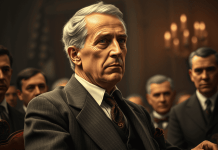
Abraham Lincoln, the 16th President of the United States, is widely regarded as one of the nation’s greatest leaders. His presidency, marked by pivotal moments in American history, including the Civil War and the abolition of slavery, continues to resonate in contemporary discussions about freedom, equality, and leadership. Born in a humble log cabin in Kentucky, Lincoln’s journey to the White House is a testament to resilience and determination. His self-education and rise through politics demonstrate a commitment to public service and the ideals of democracy. As we explore Lincoln’s life and presidency, we dive into the complexities of his leadership style, the challenges he faced during tumultuous times, and his enduring legacy that shapes American society today.
Early Life and Education of Abraham Lincoln
Abraham Lincoln was born on February 12, 1809, in Hardin County, Kentucky, to Thomas and Nancy Lincoln. He was the second child in a family that would face their fair share of hardships. The Lincolns were primarily farmers, and the family struggled with poverty. In 1811, when Lincoln was just two years old, his family moved to Indiana, seeking better opportunities. This move was a defining moment, as it marked Lincoln’s first experience of a frontier life that would shape his character.
Lincoln’s childhood was marked by a lack of formal education. The rural areas where he lived offered limited schooling, yet Lincoln showcased an unquenchable thirst for knowledge. He was an avid reader, often borrowing books from neighbors and devouring whatever literature he could find. This self-education would later contribute significantly to his eloquence and thoughtfulness as a leader. By the age of 16, he had already developed an interest in literature and language, reading texts on mathematics, grammar, and the classics.
Despite his early hardships, landscape and experiences in Indiana cultivated a strong sense of justice and fairness in young Lincoln. Though he had to work on the family’s farm, he often found time to debate with locals and engage in discussions that shaped his political views. His ability to articulate his thoughts and understanding of the world around him would soon pave the way for his future endeavors.
In 1830, the Lincolns moved once more, this time to Illinois. This move was pivotal in Lincoln’s life, as it provided him with new opportunities. Eventually, he sought a more formal career path. Lincoln worked various jobs, including rail-splitting and store keeping, before pursuing a career in law. A self-taught lawyer, he would study legal texts and apply his knowledge practically. His early work in the legal field established him as a prominent figure in his community.
Lincoln’s rise in the Illinois legal community led to his entry into politics. In 1834, he was elected to the Illinois State Legislature as a member of the Whig Party. His work in the legislature began to reflect his deep-rooted principles, advocating for internal improvements and the abolition of slavery. This was just the beginning of Lincoln’s influential career in politics as he rose through the ranks, shaping his understanding of governance and societal issues.
Political Career Before the Presidency
After his initial foray into politics, Abraham Lincoln’s political career continued to flourish throughout the 1830s and begun 1840s. His tenure in the Illinois State Legislature was marked by a focus on infrastructure projects, capitalizing on the growing demand for internal improvements as the nation expanded. His determination to improve the lives of his constituents was evident in his advocacy for roads, railroads, and education. These experiences would lay the groundwork for Lincoln’s future policies as President.
In 1846, Lincoln was elected to the United States House of Representatives, where he served a single term. Although his time in Congress was relatively short, it was significant. He bravely opposed the Mexican-American War, arguing that it was driven largely by the expansion of slavery. This stance, alongside his Whig Party affiliation, began to shape his reputation nationally as a politician committed to justice and the principles of the founding fathers.
Following his congressional term, Lincoln returned to Illinois to focus on his law practice. It was during this period that he established himself as a highly regarded attorney, known for his persuasive skills and integrity. His legal career kept him deeply entrenched in Illinois politics, allowing him to build networks and continue to advocate for the issues he passionately believed in.
The political landscape began to evolve in the 1850s with the rise of the Republican Party, which was galvanized by opposition to the expansion of slavery into the territories. Lincoln instantly aligned himself with the party’s principles, emphasizing the importance of freedom and equality. His involvement in the Illinois Republican Party further solidified his leadership role, and he gained recognition for his articulate speeches and unwavering stance against slavery.
The Lincoln-Douglas debates of 1858 were pivotal in catapulting him to national prominence. During his campaign for the U.S. Senate against Stephen A. Douglas, Lincoln showcased his remarkable oratory skills, engaging in debates that raised important points about human rights, governance, and the morality of slavery. Though he lost the Senate race, the debates cemented his status as a prominent Republican figure.
As the country approached the volatile political climate of the 1860 presidential election, Lincoln’s name emerged as a leading candidate for the Republican nomination. His ability to unite various factions represented a new hope for the party. Ultimately, Lincoln secured the nomination and won the presidency in a time marked by deep divisions and impending conflict.
The Civil War Era: Leadership and Decisions
With the election of Abraham Lincoln in 1860, the United States faced unprecedented challenges. His presidency began amidst the swirling tensions of sectionalism, which would soon erupt into the Civil War. The South’s fears of losing their way of life, particularly regarding the institution of slavery, combined with Lincoln’s ascension to power, led to the secession of seven Southern states shortly after his election. Lincoln’s commitment to preserving the Union would define his leadership during this tumultuous period.
Immediately upon taking office, Lincoln’s priority was clear: he would not allow the Union to disintegrate. His approach was marked by a delicate balance—seeking to preserve the Union while responding to the ramifications of the Southern states’ secession. Lincoln’s leadership style was characterized by a combination of humility, resolve, and strategic foresight. He understood that the country needed clear direction, which necessitated decisive actions even amidst uncertainty.
The early months of Lincoln’s presidency were consumed by the escalating conflict between the North and South. He faced enormous pressure from various factions, each demanding different approaches to the conflict. Many in the North initially believed that the war would be short-lived, yet as battles raged on, it became evident that the struggle would be long and arduous.
A turning point during this period was the First Battle of Bull Run in July 1861, where Union troops suffered a surprising defeat. This loss highlighted the need for more effective military leadership and strategic planning. Lincoln took decisive action by appointing General George B. McClellan as the commander of the Army of the Potomac, hoping to instill a sense of discipline and strategy within the Union forces. However, McClellan’s reluctance to engage aggressively would lead to frustration in Lincoln and among the general public.
As the war progressed, Lincoln demonstrated remarkable adaptability in military leadership. He sought to learn from his initial failures and engaged directly with his generals about strategies. The appointment of General Ulysses S. Grant marked another significant shift; Grant’s aggressive tactics and relentless pursuit of victory reflected Lincoln’s own vision of warfare. Together, they epitomized a new approach in military strategies that would ultimately prove effective in securing Union victories.
Beyond military concerns, Lincoln was deeply committed to the question of emancipation. As the war unfolded, he began to recognize that the abolition of slavery was not just a moral imperative but also a strategic necessity to undermine the Confederate war effort. In 1862, Lincoln issued the preliminary Emancipation Proclamation, which set the stage for a transformative shift in the war’s goals. His decision was met with both acclaim and criticism, further illustrating the complexities of his leadership.
Lincoln’s ability to navigate the ever-changing landscape of the Civil War showcased his resilience as a leader. Through correspondence, public addresses, and personal communication, he conveyed his unwavering commitment to the Union’s survival. His famous speeches, such as the Gettysburg Address, underscored the larger ideals at stake—not just the preservation of the Union, but the principles of democracy and liberty that are foundational to the nation.
Emancipation Proclamation and Its Impact
One of the most consequential decisions of Abraham Lincoln’s presidency was the issuance of the Emancipation Proclamation on January 1, 1863. This landmark executive order transformed the nature of the Civil War, making clear that the struggle was not only about preserving the Union but also about emancipation and human rights. The proclamation declared that all enslaved people in Confederate-held territories were to be set free, shifting the focus of the conflict toward a fight for liberty.
The Emancipation Proclamation was a strategic move that reflected Lincoln’s evolving views on slavery and its relationship to the war. Initially wary of imposing abolition as a national policy due to fears of alienating border states and moderates in the North, Lincoln’s perspective shifted as the war progressed. He recognized that emancipation would weaken the Confederacy’s ability to sustain the war effort, and it would transform the conflict into one that could rally the North’s moral commitment.
The document was not without limitations; it did not immediately free all enslaved individuals, as it only applied to the states in rebellion. However, it set the stage for a broader pursuit of freedom. The proclamation galvanized enslaved people to escape from bondage and seek refuge with Union forces. Many individuals took great risks to assert their freedom, and thousands responded to Lincoln’s call to arms, enlisting in the Union army. The participation of former enslaved individuals would play a critical role in the eventual Union victory.
Beyond its military implications, the Emancipation Proclamation signified a moral and ideological shift in the war. It aligned the Union’s cause with the principles of freedom and equality, challenging the nation to confront its history of enslavement. Lincoln promoted the proclamation as a necessity for achieving broader goals, emphasizing that slavery would not only be challenged but also dismantled as a “wrong which must be righted.”
Internationally, the Emancipation Proclamation painted the Union in a favorable light, gaining support from countries such as Britain and France, which had frowned upon slavery. It transformed the Civil War into a struggle not just for the Union but for human dignity, making it more difficult for foreign powers to intervene on behalf of the Confederacy.
However, the proclamation also attracted criticism from various factions. Some abolitionists felt it did not go far enough, while conservatives viewed it as an overreach of presidential authority. Nevertheless, Lincoln defended his actions, emphasizing the necessity of the decision during wartime. The proclamation ultimately laid the groundwork for the passage of the Thirteenth Amendment, which abolished slavery altogether.
The impact of the Emancipation Proclamation reverberated through history, establishing Lincoln as a key figure in advancing civil rights and reshaping national identity. His unwavering commitment to the principles enshrined in the document underscored a legacy that continues to resonate in contemporary discussions about freedom, equality, and justice.
Lincoln’s Legacy and Assassination
Abraham Lincoln’s presidency came to a tragic end with his assassination on April 14, 1865. Just days after the surrender of Confederate General Robert E. Lee at Appomattox Court House, Lincoln was shot by John Wilkes Booth, a Confederate sympathizer. The assassination shocked the nation and plunged America into mourning, marking a significant turning point in the country’s history.
Lincoln’s legacy as a leader is defined by his resolve in uniting the country and advocating for the abolition of slavery. His leadership style, characterized by empathy, resilience, and a commitment to moral principles, continues to inspire generations. Lincoln viewed democracy not merely as a system of governance but as a moral force that hinged on the principles of equality and human rights.
In the years following his death, Lincoln’s contributions were recognized and celebrated. The passage of the Thirteenth, Fourteenth, and Fifteenth Amendments, aimed at securing civil rights for all Americans, can be directly attributed to the groundwork laid during his presidency. His vision for a united nation free from the shackles of slavery became foundational to the civil rights movements that would emerge throughout American history.
Moreover, Lincoln’s speeches, such as the Gettysburg Address and his second inaugural address, remain cornerstone texts of American rhetoric. They encapsulate the essence of his ideals, emphasizing unity, reconciliation, and the critical nature of human rights. These speeches continue to inspire not only political leaders but also citizens seeking to effect social change.
The various monuments, memorials, and literary portrayals of Lincoln highlight the profound impact he made during his time and the ways in which he is venerated as a symbol of hope and perseverance. His birthday is celebrated, and his likeness appears on currency and in numerous institutions, ensuring his place in the annals of history.
Despite the challenges during his presidency, Lincoln’s unwavering commitment to the Union and his deep moral convictions leave an indelible mark on American history. He embodies the ideals of democracy and social justice, serving as a reminder of the ongoing struggle for equality. As contemporary society grapples with issues of division and inequality, Lincoln’s legacy continues to inspire dialogue and action toward a more just and inclusive world.
Conclusion
The history of President Abraham Lincoln is a testament to the power of resilience, leadership, and moral conviction. From his humble beginnings to becoming one of the most revered figures in American history, Lincoln’s journey illustrates the challenges of governance during tumultuous times. His presidency, defined by the upheaval of the Civil War and the transformative Emancipation Proclamation, left an enduring legacy that shapes the nation today.
Lincoln’s unwavering commitment to preserving the Union and promoting the ideals of freedom and equality serves as a powerful reminder of the importance of leadership in the face of adversity. His ability to communicate profoundly and empathetically set a precedent for future leaders. As we reflect on his life, we recognize that America’s journey toward justice—and the ideals embraced by Lincoln—is a continual process that requires active participation from all citizens.
Through his determination, Lincoln paved the way for a nation to confront its identity and recommit to the values enshrined in its founding documents. The lessons learned from his presidency resonate deeply today, highlighting the importance of unity, resilience, and unwavering dedication to justice and equality. Lincoln’s legacy is not merely a chapter in history; it is an ongoing story of struggle, hope, and the pursuit of a better future for all.
Sources
- “Abraham Lincoln: A Life” by Michael Vorenberg. Link
- “Team of Rivals: The Political Genius of Abraham Lincoln” by Doris Kearns Goodwin. Link
- “Lincoln’s Emancipation Proclamation: The End of Slavery in America” by Allen C. Guelzo. Link
- “Abraham Lincoln and the Fight for Union and Freedom” by John Stauffer. Link
- National Park Service. Abraham Lincoln. Link