

Introduction
Donald Trump, a name that commands attention and elicits strong reactions, has played a pivotal role in shaping contemporary American politics and culture. From his roots in a wealthy New York family to becoming the 45th and 47th president of the United States, Trump’s journey is marked by bold ventures, controversial statements, and a unique approach to governance. His rise in the business world set the stage for a later foray into politics, where his unorthodox style resonated with millions of voters seeking change. This comprehensive article delves into key stages of Trump’s life, highlighting his early years, business endeavors, political rise, presidency, and post-presidency impact. Through this exploration, we aim to understand the complexities of Donald Trump’s legacy and his influence on American society.
Early Years and Education
Donald John Trump was born on June 14, 1946, in Queens, New York, to Frederick C. and Mary MacLeod Trump. He was the fourth of five children in a well-to-do family. His father was a prominent real estate developer who instilled a strong work ethic in his children while shaping young Donald’s perspectives on business and success. Growing up in a privileged environment, Trump was exposed to the world of real estate from an early age, setting the stage for his future career.
From a young age, Trump displayed a competitive and ambitious personality. He attended the Kew-Forest School, where he was often described as a bright student but struggled with discipline. At the age of 13, he transitioned to the New York Military Academy, where his parents hoped that a structured environment would help him mature. The military school provided Trump with some discipline and helped cultivate his leadership skills. He engaged in various activities, including athletics, contributing to his development as a confident and driven individual.
Following his graduation from the military academy in 1964, Trump enrolled at Fordham University, where he spent two years before transferring to the prestigious Wharton School of the University of Pennsylvania. At Wharton, he focused on real estate and finance, ultimately graduating in 1968 with a Bachelor of Science degree in economics. This academic background laid the foundation for his understanding of business and finance, which would prove instrumental in his career.
Upon graduation, Trump faced the draft for the Vietnam War. He received multiple deferments, claiming medical issues—including bone spurs—prevented him from serving. This aspect of his life would later attract attention and criticism during his political career. After fulfilling his military obligations, Trump joined his father’s real estate company, E. Trump & Son. Initially, he worked on various projects, learning the ropes of the real estate industry while developing a keen eye for opportunity.
In the 1970s, Trump began to carve out his niche in the business world. His first significant venture was the renovation of the Commodore Hotel, which he transformed into the Grand Hyatt New York in partnership with Hilton Hotels. This successful project propelled him into the public eye and helped establish his reputation as a savvy businessman. Trump’s ability to leverage his family name and his innovative marketing strategies attracted attention and set a precedent for his future ventures.
By the end of the 1970s, Trump had built a diverse portfolio of real estate holdings and business interests. His early years and educational experiences shaped him into a dynamic figure capable of navigating the complexities of the business landscape. The foundation laid during this period would significantly influence his later ventures, allowing him to navigate the challenges that accompanied his rise to fame and notoriety.
Business Career and Major Ventures
Donald Trump’s business career is characterized by both remarkable successes and significant failures, making it a subject of extensive discussion. After establishing himself in the real estate market, Trump expanded his empire into various industries. His efforts to diversify his investments illustrated his ambition and desire to remain in the public eye.
In the 1980s, Trump became a household name due to high-profile projects such as the Trump Tower, a luxury skyscraper located on Fifth Avenue in Manhattan. This iconic building exemplified Trump’s brand of opulence and success. During this time, he also delved into casino ownership, launching ventures like the Trump Taj Mahal, which opened in 1990. The Taj Mahal was touted as the “eighth wonder of the world,” yet it faced challenges almost immediately, leading to bankruptcy just a year later. This marked one of Trump’s first major failures, raising questions about his business strategies and financial decisions.
Trump’s approach to business was often characterized by high-risk ventures and aggressive marketing. He frequently appeared in the media to promote his projects and lifestyle, which played a critical role in establishing his brand. However, his ventures were not without controversy. Trump’s casinos, including the Trump Plaza and Trump Marina, faced financial difficulties, leading him to file for bankruptcy multiple times throughout the 1990s. These bankruptcies raised concerns among investors and brought scrutiny to his management style and business ethics.
In addition to real estate and casinos, Trump ventured into other industries, including reality television. The reality show “The Apprentice,” which aired in 2004, propelled him into mainstream media and helped solidify his status as a celebrity. The show’s success allowed Trump to rebrand himself as a successful entrepreneur and negotiator, further enhancing his public persona.
Despite his successes, Trump’s business career was marred by controversies regarding ethics and practices. He faced multiple lawsuits, including allegations of fraud related to Trump University, a for-profit educational institution accused of misleading students. These controversies highlighted the complexities of his approach to business, where successes were often overshadowed by failures and legal challenges.
Throughout the late 1990s and early 2000s, Trump navigated a tumultuous business landscape. While he continued to achieve notable successes, the financial struggles of his casinos and various lawsuits created a mixed legacy. Trump’s fearless business endeavors were emblematic of his personality—both bold and brash—mirroring the rollercoaster nature of his career. As he transitioned into politics, the experiences gained during these entrepreneurial challenges would inform his approach to leadership and governance.
Political Ascendancy and 2016 Election
Donald Trump’s entry into politics marked a significant turning point in his life and heralded a new chapter in American political discourse. In June 2015, he announced his candidacy for the presidency as a Republican, launching a campaign that defied conventional political norms. Trump’s platform focused on issues such as immigration, trade, and national security, appealing to a base of voters dissatisfied with traditional politicians and the status quo.
Trump’s campaign kicked off with a controversial statement regarding immigration, where he characterized Mexican immigrants as “criminals” and “rapists.” This statement ignited a firestorm of debate and media coverage, often overshadowing other candidates in the Republican primary. His unfiltered approach to communication resonated with voters seeking authenticity and challenged political correctness in discourse, allowing him to differentiate himself from his competitors.
As the Republican primaries unfolded, Trump employed a media strategy that leveraged social media—particularly Twitter—to engage directly with his supporters. This ability to control the narrative and communicate instantaneously became a hallmark of his campaign. Trump’s rallies drew large crowds, and his messaging centered on a populist theme of restoring American greatness, which captivated many disaffected voters.
Throughout the primary season, Trump faced seasoned politicians yet managed to maintain a lead over the packed Republican field. His straightforward style and ability to articulate grievances regarding the political establishment garnered him considerable support. By the time he secured the Republican nomination in July 2016, Trump had transformed the party’s platform, prioritizing nationalist and populist themes.
The general election campaign against Democratic nominee Hillary Clinton was marked by heated debates and polarizing rhetoric. Trump’s ability to connect with voters in key swing states played a crucial role in his strategy. Issues such as economic inequality, job creation, and immigration were central to his campaign, and he effectively communicated these themes to resonate with working-class voters.
Despite controversies, including scrutiny over his business dealings and personal conduct, Trump won the election on November 8, 2016, with a narrow victory in the Electoral College, despite losing the popular vote. His victory sent shockwaves through the political landscape, prompting discussions about the future of political engagement in the United States. Trump’s candidacy and subsequent victory were emblematic of a broader trend of populism and discontent with conventional politics.
The election of Donald Trump as president marked a watershed moment in American history, provoking intense reactions from supporters and critics alike. His rise in politics spotlighted the deep divisions within American society and raised fundamental questions about governance, identity, and the role of the media in contemporary politics. As he prepared to assume office, the implications of his election and style of leadership were still unfolding.
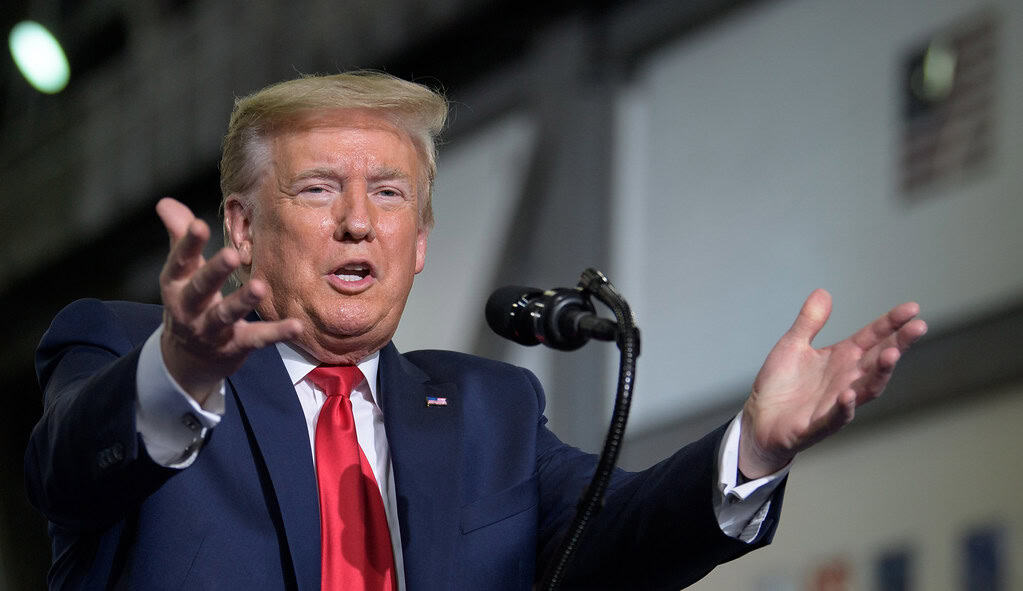
President Trump Postlaunch Remarks (NHQ202005300077) by NASA HQ PHOTO is licensed under CC-BY-NC-ND 2.0
Presidency: Policies and Administration
Donald Trump was inaugurated as the 45th president of the United States on January 20, 2017, bringing with him a new approach to governance that diverged sharply from his predecessors. His administration was marked by rapid changes, a focus on deregulation, and an “America First” foreign policy.
One of his first significant actions as president was the signing of an executive order to withdraw the United States from the Trans-Pacific Partnership (TPP) and the Paris Agreement on climate change, signaling a shift toward nationalism and prioritization of American interests. Trump’s administration emphasized tax reform, culminating in the passage of the Tax Cuts and Jobs Act in December 2017, which aimed to stimulate economic growth by lowering tax rates for individuals and businesses. Proponents hailed the legislation as a successful tool for economic revitalization, while critics argued it disproportionately favored corporations and high-income earners.
Immigration policy became a defining issue during Trump’s presidency. He implemented controversial measures, such as the travel ban targeting several predominantly Muslim countries and efforts to construct a wall along the U.S.-Mexico border. These initiatives drew sharp criticism, including accusations of promoting xenophobia and racism. However, Trump defended his immigration policies as necessary measures to protect national security and uphold the rule of law.
Deregulation became another hallmark of the Trump administration, with extensive efforts to roll back federal regulations across various sectors. The administration argued that deregulation would spur economic growth and reduce the burden on businesses, while opponents expressed concerns about public safety and environmental protections. These actions raised questions about the balance between economic interests and regulatory oversight.
Trump’s foreign policy was characterized by unpredictability and a willingness to challenge traditional alliances. His approach to international relations included contentious meetings with world leaders and a focus on bilateral agreements. Trump’s summit with North Korean leader Kim Jong-un in 2018 was historic, as it represented the first time a sitting U.S. president met with a North Korean leader to discuss denuclearization. Although the meetings garnered significant attention, the outcomes were met with skepticism as follow-up agreements fell short of substantial progress.
Throughout his presidency, Trump faced considerable challenges, including investigations into alleged connections between his campaign and Russian interference in the 2016 election, leading to a two-year inquiry by Special Counsel Robert Mueller. While the investigation did not result in criminal charges against Trump, it contributed to a climate of division and contentiousness within American politics.
Trump’s presidency was a period of profound ideological polarization, with supporters lauding his ability to challenge the establishment and critics condemning his divisive rhetoric and actions. The legacy of his administration remains fiercely debated, as discussions about governance, accountability, and the future direction of American democracy continue to unfold.
Post-Presidency Influence and Legacy
After leaving office on January 20, 2021, Donald Trump’s influence on American politics remained significant and contentious. His departure was marked by the January 6 Capitol riot, when a mob of his supporters stormed the U.S. Capitol in an attempt to overturn the election results. This unprecedented event provoked widespread condemnation and raised serious concerns about the state of democracy in the United States. In the aftermath, Trump faced a second impeachment, making him the only president in U.S. history to be impeached twice. However, he was acquitted by the Senate, reflecting deep partisan divisions in Congress.
Trump’s post-presidency period has been characterized by a continued commitment to his political brand and a focus on maintaining influence within the Republican Party. He championed candidates in the 2022 midterm elections who embraced his vision and utilized his endorsement power to sway primaries in favor of loyalists. This strategy illustrated Trump’s enduring popularity among his base and his ability to shape the party’s agenda.
His frequent public appearances, rallies, and social media engagement allowed him to remain relevant in political discussions. Trump’s messaging often focused on themes of victimhood and grievances about the 2020 election, reinforcing the notion of a stolen election among his supporters. This narrative fostered ongoing divisions within the Republican Party and heightened tensions between differing factions.
The legacy of Donald Trump continues to spark intense debate. Supporters argue that his presidency revitalized American nationalism and prioritized American interests, while critics contend that his actions have undermined democratic institutions and norms. The polarization generated during his tenure has reshaped political engagement in the United States, prompting significant discussions about the future of democracy and governance.
Researchers and political analysts grapple with the impact of Trump’s presidency on the Republican Party, the role of populism in contemporary politics, and the evolving landscape of American society. As events continue to unfold, discussions surrounding Trump’s legacy are likely to remain relevant, serving as a critical case study in modern American history.
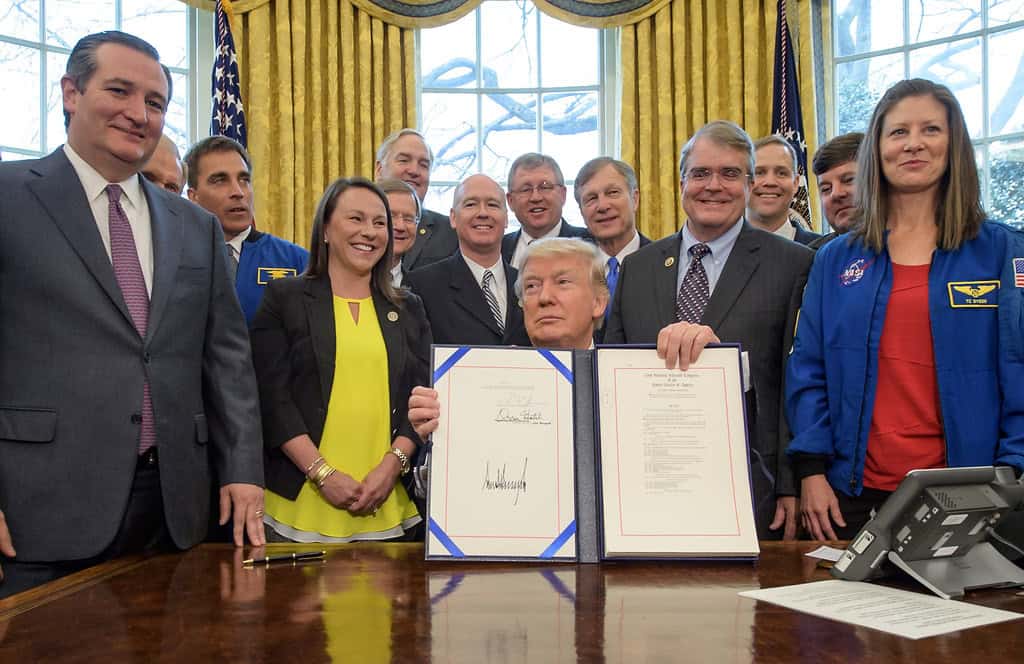
Transition Authorization Act Signing (NHQ201703210001) by NASA HQ PHOTO is licensed under CC-BY-NC-ND 2.0
Trump’s Life from 2021 to 2025
The years following Donald Trump’s presidency, from 2021 to 2025, were marked by a series of significant events that underscored his ongoing influence in American politics and the evolving dynamics within the Republican Party. After leaving office, Trump remained a dominant figure within the party, leveraging his vast base of support while navigating a divided political landscape.
Following the tumultuous end to his presidency and the events of January 6, 2021, Trump faced scrutiny regarding his role in inciting the Capitol riot. Nevertheless, he quickly shifted his focus back to political life, establishing a presence through public speeches, rallies, and a robust social media strategy, despite being banned from major platforms. He maintained his commentary through his own channels and conservative media outlets, allowing him to address his supporters directly and shape the political narrative.
In the 2022 midterm elections, Trump played a pivotal role by endorsing candidates who aligned with his vision of America First. Many of the candidates he supported successfully won their primaries, showcasing Trump’s enduring popularity among his base. However, the midterms also revealed fractures within the Republican Party, with some traditional conservatives pushing back against Trump’s more radical elements. These tensions foreshadowed a challenging path for party unity as the 2024 presidential election approached.
Throughout this period, Trump faced various legal challenges. These included ongoing investigations into his business practices and potential election interference. In particular, the New York Attorney General’s office and the Manhattan District Attorney’s office conducted extensive inquiries, leading to civil and criminal cases against him concerning financial dealings and alleged tax fraud. Trump vehemently denied any wrongdoing and characterized these investigations as politically motivated assaults, reinforcing the narrative of victimhood among his supporters.
Despite the legal pressures, Trump remained undeterred and continued to assert his position in political discourse. His rallies and public appearances were characterized by familiar themes of grievance and resistance against perceived injustices, further energizing his base and solidifying his status as a key player in American politics.
As the 2024 presidential election cycle began, Trump officially announced his candidacy, seeking a second term in the White House. His campaign emphasized familiar slogans, such as “Make America Great Again,” and focused on core issues, including immigration, economic recovery post-COVID-19, and critiques of the Biden administration’s policies. Trump’s ability to mobilize supporters and dominate media coverage was evident throughout his campaign events.
His main challengers within the Republican Party included notable figures who sought to distinguish themselves from Trump’s influence while appealing to the party’s base. This led to heated primary debates and contests, further amplifying the ideological divide both within the party and among the electorate. Despite the competition, Trump’s influence remained formidable, and he consistently led in polls among Republican voters.
By 2025, Trump’s legacy continued to be a topic of intense debate and reflection. His presidency had provoked deep societal divides, influencing not only political discourse but also cultural conversations around nationalism, populism, and media representation. Supporters viewed him as a champion for the forgotten American worker, while critics pointed to his actions as detrimental to democratic norms.
Amid his ongoing legal battles and the complexities of his campaign, discussions surrounding Trump’s potential impact on the future of the Republican Party intensified. Many political analysts speculated about the party’s direction post-Trump and whether a new generation of leadership could emerge. However, it was clear that Trump’s brand of politics had indelibly altered the landscape, raising fundamental questions about the values and priorities of American conservatism.
Conclusion
The comprehensive history of Donald Trump underscores the complexities of his trajectory from a New York real estate developer to President of the United States. His early life and education shaped his ambitious nature and entrepreneurial spirit, leading to a diverse business career marked by both significant successes and notable failures. Trump’s rise in politics represented a significant departure from traditional political norms, resonating with millions of voters who sought change and authenticity.
His presidency was characterized by rapid transformations, controversial policies, and unprecedented challenges, all of which contributed to an evolving political landscape. Following his departure from office, Trump’s ongoing influence in the Republican Party and American politics signals that his legacy remains a subject of fervent discourse. Understanding the history of Donald Trump offers valuable insights into contemporary American society and the complexities of political engagement in an increasingly polarized environment.
Sources Consulted
- Biography.com: Donald Trump
- The New York Times: Donald Trump
- BBC News: Donald Trump
- CNN: Donald Trump
- The White House: Donald Trump’s Presidency
Watch also







[…] Texas, Missouri, and California. These mobilizations coincide with planned demonstrations against President Trump‘s agenda, dubbed “No Kings,” and a controversial military parade scheduled for […]
[…] United States Capitol has undergone a significant metamorphosis since its inception in the late 18th century. The story of […]
[…] architectural history of the White House reflects the changing ideals, values, and power dynamics of the United States. Originally designed […]
[…] pivot from decades of promoting free trade. The imposition of tariffs on steel and aluminum by the Trump administration sparked debates around national security and economic sovereignty. This approach has […]