Introduction
Rolex is a name synonymous with luxury, precision, and innovation in the world of horology. The Swiss watchmaker has become an emblem of success and status, worn by world leaders, celebrities, and adventurers alike. Behind the brand’s impeccable reputation is a rich history of technical advancements, daring innovations, and a commitment to excellence. This article traces the fascinating history of Rolex, from its modest beginnings in the early 20th century to its current status as one of the most prestigious and recognized brands in the world.
The Early Years: Foundation and Vision
Rolex was founded in 1905 by Hans Wilsdorf, a visionary entrepreneur of German descent, and his brother-in-law, Alfred Davis, in London. Initially known as “Wilsdorf & Davis,†the company specialized in the distribution of timepieces. At the time, wristwatches were not yet popular, and pocket watches were considered the standard for accurate timekeeping.
Wilsdorf saw potential in wristwatches, but one of the biggest challenges was ensuring that they could offer the same level of precision as pocket watches. To meet this challenge, he sought out high-quality movements from Swiss watchmakers. In 1908, Wilsdorf registered the brand name “Rolex,†a name he believed was easy to pronounce in any language and would look good on the dial of a watch. The company soon shifted its headquarters to Switzerland, the heart of watchmaking excellence.
Rolex and the Quest for Precision
One of Rolex’s key breakthroughs came in 1910, when a Rolex wristwatch received the first-ever Swiss Certificate of Chronometric Precision from the Official Watch Rating Centre in Bienne. This was a monumental achievement, as it signaled that wristwatches could match the precision of pocket watches. Just four years later, in 1914, Rolex achieved another milestone when one of its timepieces was awarded a class “A†precision certificate by the Kew Observatory in London—a distinction previously reserved for marine chronometers, which were known for their precision.
Wilsdorf’s obsession with precision became the cornerstone of Rolex’s identity. As the company continued to innovate, it began to attract attention from individuals seeking high-performance and reliable timepieces, including aviators, explorers, and military personnel.
Waterproofing Innovation: The Rolex Oyster
In 1926, Rolex introduced a groundbreaking innovation that would change the course of watchmaking: the Rolex Oyster, the world’s first waterproof wristwatch. The Oyster case featured a hermetically sealed design, which protected the movement from dust, moisture, and pressure. To demonstrate its effectiveness, Rolex put the Oyster to the ultimate test.
In 1927, Mercedes Gleitze, a British swimmer, became the first woman to swim across the English Channel while wearing a Rolex Oyster around her neck. She completed the swim in over 10 hours, and the watch emerged unscathed, still functioning perfectly. This daring publicity stunt earned Rolex widespread recognition and solidified the brand’s reputation for durability and reliability. From then on, Rolex’s association with the Oyster symbolized its commitment to engineering timepieces that could withstand the most challenging conditions.
The Perpetual Movement: An Automatic Success
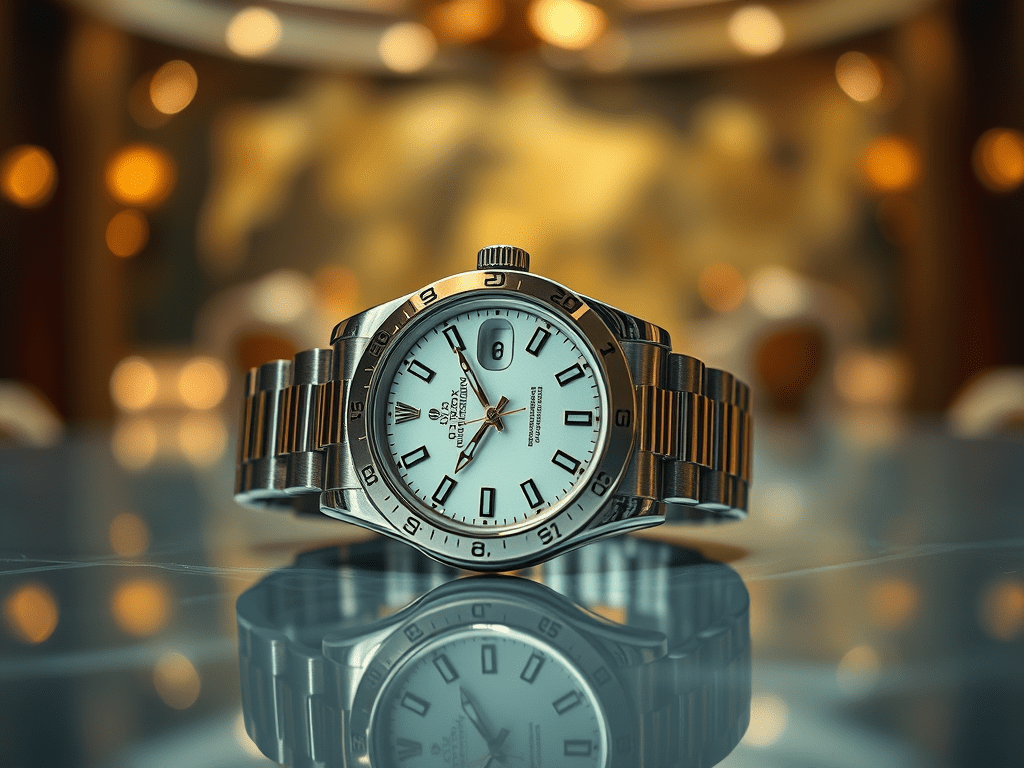
Rolex didn’t stop with the waterproof case; it continued to innovate in the field of automatic movements. In 1931, the company introduced the Rolex Oyster Perpetual, the first wristwatch with a self-winding mechanism. Powered by a rotor that wound the mainspring using the motion of the wearer’s arm, the Perpetual movement eliminated the need for manual winding and marked another leap forward in convenience and practicality.
The Oyster Perpetual’s automatic movement became a hallmark of Rolex’s identity, showcasing the brand’s commitment to continuous improvement in both form and function. This development paved the way for other advancements that would make Rolex synonymous with innovation and precision in the world of luxury watches.
Rolex in the Age of Exploration
Rolex’s reputation as a reliable and durable watch continued to grow during the mid-20th century, particularly as it became the choice of adventurers and explorers. One of the most notable examples of this came in 1953, when Sir Edmund Hillary and Tenzing Norgay became the first climbers to reach the summit of Mount Everest. Although Rolex was not the official timekeeper for the expedition, Hillary wore a Rolex Oyster Perpetual during the climb, a testament to the brand’s robustness and reliability in extreme conditions.
That same year, Rolex introduced the Rolex Submariner, the world’s first divers’ watch that was waterproof to a depth of 100 meters (330 feet). The Submariner quickly became a favorite among professional divers, military personnel, and underwater explorers, and it remains one of Rolex’s most iconic models to this day.
In 1960, Rolex further demonstrated its commitment to exploration when a specially designed Rolex Deep Sea Special watch accompanied the bathyscaphe Trieste on its record-breaking dive to the bottom of the Mariana Trench, the deepest part of the world’s oceans. The watch survived the extreme pressure at a depth of 10,916 meters (35,800 feet), emerging intact and fully operational.
Iconic Models and Technological Advancements
Over the decades, Rolex has introduced a series of iconic models that have become legends in their own right. The Rolex Day-Date, launched in 1956, was the first wristwatch to display the date and day of the week in full on the dial. Nicknamed the “President’s Watch†because of its association with U.S. Presidents and other world leaders, the Day-Date has become one of Rolex’s most prestigious models.
The Rolex GMT-Master, introduced in 1955, was designed specifically for international pilots and featured a 24-hour hand and a rotating bezel to allow wearers to read two time zones simultaneously. The GMT-Master became a favorite of airline pilots and travelers alike, further cementing Rolex’s association with precision and functionality.
Another milestone came in 1963 with the introduction of the Rolex Cosmograph Daytona, a chronograph designed for professional race car drivers. The Daytona’s tachymeter scale allowed drivers to measure average speeds, making it an essential tool for motorsport enthusiasts. Today, the Daytona is one of the most sought-after and collectible watches in the world, with certain models commanding astronomical prices at auctions.
Rolex and Philanthropy
In addition to its role as a leader in the luxury watch industry, Rolex has long been associated with philanthropic efforts. The Rolex Awards for Enterprise, established in 1976, recognize individuals who are working on groundbreaking projects in areas such as science, exploration, the environment, and cultural heritage. Through these awards, Rolex has supported countless individuals and projects aimed at improving the world.
Furthermore, Rolex has been a major supporter of the arts, sponsoring prestigious institutions and events such as the Salzburg Festival, the Royal Opera House, and the Academy Awards. The company’s commitment to excellence extends beyond watchmaking, encompassing a broader dedication to fostering creativity and innovation.
The Modern Era: Maintaining Tradition While Embracing Innovation
As Rolex moved into the 21st century, the company continued to build on its legacy while incorporating modern advancements in technology. The brand’s manufacturing processes have become increasingly sophisticated, with the use of state-of-the-art materials such as Cerachrom (a scratch-resistant ceramic) and Oystersteel (a superalloy), ensuring that Rolex watches remain at the forefront of durability and precision.
Despite these innovations, Rolex has remained true to its core values of quality, reliability, and timeless design. The brand’s refusal to compromise on these principles has allowed it to maintain its position as the world’s leading luxury watchmaker, even as trends and fashions have changed over the decades.
Conclusion
From its humble beginnings in London to its position as an iconic global brand, Rolex has carved out a unique place in the world of horology. Through relentless innovation, a dedication to precision, and a commitment to excellence, Rolex has set the standard for luxury timepieces for over a century. As the company continues to push the boundaries of watchmaking, it remains a symbol of success, elegance, and timeless craftsmanship. Whether worn by world leaders, adventurers, or enthusiasts, a Rolex watch is much more than a timepiece—it is a legacy of innovation and a testament to the enduring pursuit of perfection.
If you want to know more about the history of Rolex visit the official website: https://www.rolex.com/en-us/about-rolex