Introduction
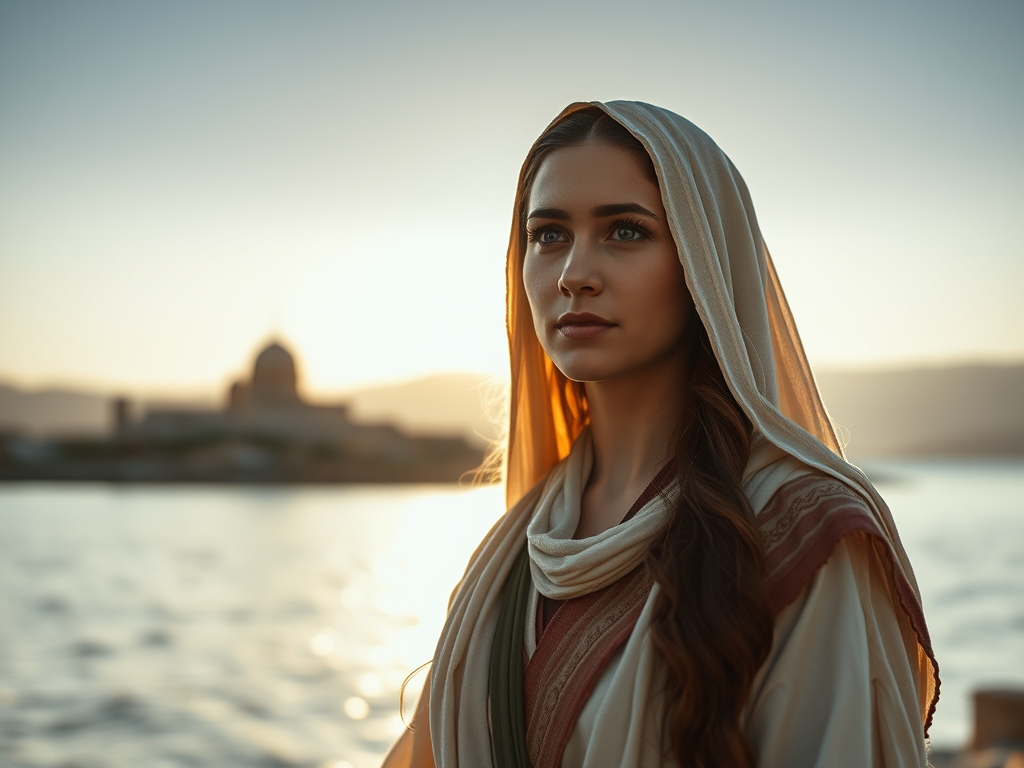
Mary Magdalene has long been a figure of intrigue and speculation within Christian tradition. Often overshadowed by popular narratives that caricature her as a repentant sinner or a mere follower of Jesus, her true story is far more nuanced and complex. Emerging from a backdrop of first-century Palestine, where cultural norms and religious practices were heavily intertwined, Mary was a key figure in the life of Jesus. She played an essential role as a disciple, witness to the crucifixion, and the first to discover the empty tomb after the resurrection. This article delves into her life, exploring the historical context, scriptural references, and the evolving perception of her persona—from biblical texts to modern interpretations, highlighting her enduring legacy across cultures and time.
Historical Context of Mary Magdalene
Mary Magdalene’s life must be understood against the backdrop of first-century Palestine, a time marked by political tension, religious fervor, and societal expectations of women. As a woman living in this era, Mary occupied a precarious position. Defined largely by her relationships with men and the rigid structures enforced by a patriarchal society, women’s roles were primarily domesticated, leaving little room for public engagement or leadership.
However, Mary Magdalene’s journey defies these limitations. Descriptions of her as coming from Magdala—a fishing village on the shores of the Sea of Galilee—suggest she was part of a socio-economic environment familiar with trade, movement, and perhaps even the early burgeoning of grassroots social movements, including those prefaced by the emerging Christian sect.
The socio-political landscape of first-century Judea was characterized by Roman occupation. This period saw a mix of Jewish traditions clashing with Hellenistic influences, as well as the insurrectionist movements growing in response to foreign rule. In this complex climate, Mary Magdalene emerged not just as a passive figure, but as an active supporter of a revolutionary message preached by Jesus of Nazareth.
Mary’s significance is further illustrated through her involvement with Jesus’ ministry, which included preaching and assembling a diverse group of followers. Unlike many women of her time, who were confined to roles of submission and service, Mary saw in Jesus a radical alternative that offered her a chance to step into a new identity. Historical texts suggest she was among the few who had the courage to follow Jesus even in his most vulnerable moments—during his crucifixion, where she stood alongside the other faithful, a testament to her courage and commitment.
Moreover, archaeological findings hint at the existence of communities headed or influenced by women, shedding light on the potential agency and leadership roles that Mary Magdalene and her contemporaries may have held. This lens challenges the traditional narrative that casts Mary primarily as an outcast or sinner, inviting a reevaluation of her character and purpose in the larger story of Jesus’ life and mission.
In summary, understanding the historical context of Mary Magdalene allows us to appreciate her not only as a follower of Jesus but as a significant player in the early Christian community. This perspective dismantles the stereotype of Mary as merely a repentant sinner and instead establishes her as a woman of profound faith and determination, encapsulating the complexities of a transformative era.
Mary Magdalene’s Biblical References and Their Interpretations
In the New Testament, Mary Magdalene is mentioned in several key passages that highlight her role and significance in the narrative of Jesus’ life. Notably, she is present at the crucifixion and is the first to witness the empty tomb, placing her at the forefront of the resurrection story. The Gospels of Mark, Matthew, Luke, and John each offer different accounts of her life, and scholars often engage in extensive analysis to draw out the nuances and implications of these texts.
Mark 15:40 mentions her explicitly during the crucifixion, identifying her as one of the women who followed Jesus and cared for him. This lays the groundwork for her established presence within Jesus’ inner circle, further supported by Matthew 27:56, which repeats her involvement during this pivotal event. The Gospel of Luke expands on her character by recounting how Jesus cast seven demons out of her (Luke 8:2), an act that not only signifies her past struggles but also underscores her profound transformation and subsequent loyalty.
However, interpretations of these references have varied greatly across different denominations and theological perspectives. For Orthodox Christians, Mary Magdalene is viewed as a saint and an example of repentance. In contrast, some modern feminist theological interpretations celebrate her as a disciple and the embodiment of divine love, reclaiming her narrative from the mischaracterizations it has often faced. This divergence in understanding reflects broader themes within the Christian community regarding how women’s roles have historically been viewed and acknowledged.
The Gospel of John offers particularly rich material regarding Mary Magdalene’s role in the resurrection. In John 20:1-18, Mary is depicted as the first to arrive at the tomb and the initial recipient of Jesus’ resurrection message. This critical position emphasizes her importance, heralding her as the “apostle to the apostles.” This title indicates that she was entrusted by Jesus to share the revolutionary news of his resurrection, a duty that would carry immense significance in the propagation of early Christianity.
Additionally, the discrepancies between the Gospels spark intriguing debates among scholars about the synthesis of oral traditions and how these stories may have been interpreted and rewritten by later authors. The eclectic nature of Mary Magdalene’s accounts fuels an ongoing dialogue about her character, leading to diverse representations that can either diminish or elevate her role, depending on the lens through which one reads the text.
In conclusion, Mary Magdalene’s biblical references serve as a pilgrimage through her life narrative, rich with layers of interpretation that reveal much about both her character and the evolving societal view of women in early Christianity. This exploration of key passages paves the way for deeper inquiry into how she has been memorialized in both sacred and secular contexts.
Theories Surrounding Mary Magdalene’s Relationship with Jesus
Throughout history, the nature of Mary Magdalene’s relationship with Jesus has sparked various theories and conjectures, ranging from the deeply spiritual to the entirely speculative. Scholars, theologians, and writers have approached this topic from multiple angles, leading to an array of interpretations that reflect both ancient beliefs and contemporary perspectives.
At one end of the spectrum, traditional Christian teachings view Mary Magdalene as a devoted follower of Jesus, emphasizing her role as a witness to the resurrection. This portrayal highlights her unwavering faith and commitment, aligning with the foundational elements of Christian doctrine that underscore the significance of the resurrection and the hope it instills for believers. In this view, Mary is revered not merely as a companion but as a vital part of the early Christian mission, one who carried the message of Christ to others.
Conversely, some modern interpretations suggest that there may have been a more intimate relationship between Mary and Jesus. These theories often draw on non-canonical texts, such as the Gospel of Mary, which offers insights into her role as a disciple with a deeper understanding of Jesus’ teachings. Some scholars argue that these alternative gospel accounts suggest a partnership that transcended the traditional teacher-student dynamic, hinting at a possible romantic or spiritual connection that has been suppressed by orthodox narratives.
One of the most sensational theories is rooted in the writings of authors and filmmakers who have popularized the concept of Mary as Jesus’ wife or lover, a notion that culminates in contemporary works like “The Da Vinci Code.” This speculative connection has fueled ongoing discourse about the feminine aspect of divinity and the potential for women’s roles to be undervalued in traditional religious interpretations. While these claims often lack substantive historical evidence, they tap into a broader cultural exploration of sexuality, power, and spirituality in religious contexts.
Furthermore, feminist scholars have critiqued the patriarchal structures inherent in religious narratives and have sought to reclaim Mary’s character as one of strength and agency rather than one of subservience or shame. They argue that by exploring the possibility of a more profound bond between Mary and Jesus, we can better understand the early Christian community’s dynamics and the essential role women played within it.
Theories surrounding Mary Magdalene’s relationship with Jesus ultimately reflect a wider discourse about women’s roles in religious histories. They engage with questions of legitimacy, authority, and the multifaceted nature of spiritual connections. As we examine these theories, it is clear that Mary Magdalene remains a compelling figure whose story continues to inspire debate and reinterpretation in both theological circles and popular culture.
Mary Magdalene in Art and Popular Culture
Mary Magdalene has been a subject of fascination in art and popular culture for centuries, often depicted in multivalent ways that reflect the evolving societal attitudes toward femininity, spirituality, and sexuality. Artists through the ages have portrayed her as a sinner, a saint, a lover, and a vessel of divine wisdom. This diverse representation provides insight into how Mary Magdalene’s character has been shaped to fit cultural narratives and artistic endeavors.
In the Middle Ages, Mary Magdalene was often depicted as a penitent sinner, particularly because of the conflation of her identity with that of the unnamed sinful woman who anointed Jesus’ feet in the Gospel of Luke. Artworks from this period frequently highlighted themes of repentance, showcasing her in the act of contrition, often surrounded by luxurious elements that hinted at her former life. One of the most notable representations is found in paintings by artists like Titian and Caravaggio, who illustrated her in emotionally charged scenes filled with lush physicality, inviting viewers to engage with the complexity of her character.
With the Renaissance came a shift in how Mary Magdalene was perceived, moving toward a more nuanced portrayal that emphasized her spiritual insights and intellectual contributions. Artists like Leonardo da Vinci began to explore her role as a disciple and a pivotal figure in the resurrection narrative, framing her in ways that challenged previous interpretations. These works propelled a dialogue about Mary’s agency, drawing attention to her vital contributions to early Christianity and highlighting her as a figure of enlightenment rather than merely a penitent.
In modern times, Mary Magdalene has continued to inspire a vast array of literature, film, and music, often reflecting contemporary views on gender and spirituality. In literature, writers like Sue Monk Kidd have reimagined Mary’s story, transforming her into a complex character who navigates the societal constraints of her time while seeking a deeper understanding of her faith. This retelling invites readers to empathize with her struggles and triumphs, painting her as a figure of resilience and empowerment.
Film and television have similarly embraced the figure of Mary Magdalene, with portrayals ranging from biblical dramas to contemporary reinterpretations. One notable film is “Mary Magdalene” (2018), which presents her as a strong and capable leader in Jesus’ ministry, steering away from narratives that diminish her role. This cinematic treatment aligns with modern feminist theology, seeking to reclaim Mary’s story as one of depth and significance.
In pop culture, Mary Magdalene has also been employed as a symbol of female empowerment and spiritual awakening, resonating with feminist movements that seek to reconnect women with their spiritual heritage. References to her in music, art, and social discourse illuminate her lasting impact on how women are perceived within spiritual narratives and their ongoing quest for agency.
In conclusion, Mary Magdalene’s portrayal in art and popular culture highlights a continuous evolution through the lenses of societal values and perceptions of gender. Her journey from a misunderstood representation of sinfulness to an emblem of strength and empowerment underscores the interplay between artistry and ideology, ensuring that her legacy remains dynamic and relevant across generations.
The Legacy of Mary Magdalene
Mary Magdalene’s legacy transcends the historical accounts and religious texts of her time, illustrating her impact as both a figure of faith and a complex symbol of empowerment. Throughout history, Mary has served as a catalyst for discussions surrounding gender, spirituality, and the role of women in religious settings.
In contemporary spirituality, Mary Magdalene is increasingly recognized as a figure who embodies the divine feminine, challenging traditional male-dominated interpretations. Feminist theologians celebrate her as a model for women seeking to reclaim their spiritual authority and challenge oppressive structures within religious communities. By emphasizing her role as the first witness to the resurrection, women are inspired to draw parallels between Mary’s experience and their pursuit of a deeper understanding of faith. As a result, she has become an icon for those advocating for a more inclusive approach to spirituality that honors both the feminine and masculine aspects of the divine.
Mary’s legacy also extends into the realm of social justice and activism. In various movements for equality, her story serves as a reminder that women have played significant roles in shaping religious and cultural narratives throughout history. By recognizing and honoring figures like Mary Magdalene, modern movements can draw from the wisdom and example of women from the past, seeking to forge paths for future generations.
In literature and education, Mary Magdalene’s life and contributions are increasingly incorporated into discussions surrounding gender and religious studies. By unearthing her historical significance and challenging traditional narratives that have often marginalized her, scholars and educators can inspire a more balanced understanding of the contributions women have made to religious thought. This engagement allows for a richer tapestry of history that celebrates diversity and encourages critical inquiry into the roles women have played across various religious traditions.
Additionally, the fascination with Mary Magdalene in popular culture fosters a broader awareness of her legacy. With each artistic reinterpretation, new conversations emerge, challenging audiences to reconsider existing assumptions about her identity and place within the Christian tradition. This continuous engagement ensures that Mary’s story remains a vital part of cultural and spiritual discourse, further affirming her status as a symbol of resilience, faith, and transformation.
In summary, Mary Magdalene’s legacy is a dynamic interplay of historical significance and contemporary relevance. As discussions surrounding her character evolve, Mary continues to inspire a dialogue that seeks to honor women’s contributions to spirituality, promote equity, and challenge the narratives that have too often confined them. Her enduring presence in religious, cultural, and social movements solidifies her as an influential figure whose story resonates across generations.
Conclusion
Throughout the centuries, Mary Magdalene has shifted from a figure of stigma to one of reverence, embodying both the complexities of her historical context and the transformative power of faith. By examining her life, the biblical references surrounding her, theories about her relationship with Jesus, and her expansive legacy in art and popular culture, we gain a deeper understanding of her significance within the Christian narrative.
Mary Magdalene’s story is one of redemption and empowerment, challenging the traditional portrayals that have often marginalized women within spiritual contexts. As we delve into her life, contending with the historical and cultural factors that shaped her identity, it becomes clear that she was a crucial figure in early Christianity. Her role as a witness to Jesus’ resurrection solidifies her status as an apostle and underscores the importance of women in the narrative of faith.
As discussions about Mary continue to evolve, her legacy remains a source of inspiration for countless individuals seeking to explore the intersection of spirituality and femininity. In reclaiming her narrative and recognizing her profound contributions, we honor all those who have paved the path for future generations of women in faith.
Read also our article The Rich History of Vatican City and Its Landmarks (2025 update)
Sources
- The Bible (Various translations)
- “The Gospel of Mary” (non-canonical text)
- Various scholarly articles on Mary Magdalene in early Christianity
- Historical analyses of women’s roles in first-century Judea
- Contemporary feminist theological works
- Art historical texts examining representations of Mary Magdalene in art
- Modern interpretations in literature and film exploring Mary’s legacy